Master Resume Keywords: Your Guide to ATS Success
Unlock the power of resume keywords! Learn how to identify and integrate them naturally to get past ATS and land your dream job.
 Published by Astha Narang|March 20, 2026|9 min read
What are resume keywords and how to use them the right way?
Is your resume falling into the ATS "Black Hole"? It's likely a keyword problem. In this guide, we break down exactly what resume keywords are, how to identify them in any job description, and the secret to weaving them into your experience naturally. Plus, see how Pika AI can automate the process for you so you never miss a shortlist again.
If you have been applying for jobs in 2026, you have probably heard of the "Black Hole." That dark, digital abyss where resumes go to die, never to be seen by a human eye.
Most people blame their experience. Some blame their formatting. But more often than not, the real culprit is something much smaller: keywords.
Keywords are the secret language of the modern job market. If you don't speak it, the gatekeeper (also known as the Applicant Tracking System, or ATS) simply won't let you through the door. But here is the thing: there is a right way and a very, very wrong way to use them.
Let's break down the anatomy of resume keywords and how to master them without sounding like a robot. And if you want to skip the guesswork entirely, you can always get your resume roasted using Pika AI and let it do the heavy lifting for you.
What Exactly Are Resume Keywords?
Think of resume keywords as the "search terms" a recruiter types into their hiring database. When a company gets 500 applications for one role, nobody is reading all 500 resumes line by line. They filter them.
Recruiters search for specific skills, tools, and certifications that are non-negotiable for the role. If the job description asks for "Data Visualization" and your resume only says "Made charts," you might be the perfect candidate. But on paper, you are invisible.
Resume keywords are the specific terms, phrases, and skills that hiring managers and ATS software look for when scanning your application. Getting them right is the difference between landing an interview and getting filtered out before a human ever sees your name.
This is exactly why tools like the Pika AI resume optimizer exist. When you get your resume roasted using Pika AI, it identifies exactly which keywords your resume is missing for a specific role, so nothing falls through the cracks.
The Three Layers of Keywords
Not all keywords are created equal. To rank highly in an ATS and impress a human recruiter, your resume needs a balanced mix of three distinct categories.
1. Role-Specific "Hard" Keywords
These are the non-negotiables. They are typically nouns that represent specific tools, technologies, or certifications required for the role.
Python · AWS · Google Analytics · Salesforce · CPA Certification · Six Sigma Black BeltThese are the primary filters. If a job requires "React.js" and it is not anywhere on your resume, the system may auto-reject you before a recruiter even sees your name. Hard keywords act as your entry ticket.
2. Action-Oriented "Skill" Keywords
These are the verbs and phrases that describe how you do your work. They demonstrate your level of seniority and your professional maturity.
Strategic Planning · Stakeholder Management · Budget Optimization · Cross-functional Leadership · P&L ResponsibilityThese help the ATS (and the recruiter) categorize you. Are you a "Doer" at the entry level, or a "Driver" at the manager or executive level? Skill keywords make that distinction loud and clear.
3. Industry-Specific "Context" Keywords
These are the buzzwords that prove you speak the language of a specific sector. They show you understand the environment, not just the tasks.
SaaS · FinTech · B2B Marketing · Supply Chain Resilience · User Experience (UX) · ComplianceContext keywords help you pass what we like to call the "Vibe Check." When your resume finally reaches a human recruiter, these terms signal that you are not just qualified on paper but that you actually understand the world you would be working in.
How the ATS Actually "Reads" Your Keywords
Here is something a lot of candidates don't realize. Modern AI-driven ATS platforms don't just count how many times a word appears on your resume. They look for semantic relevance. The system is smarter than a simple word-counter, and your strategy needs to be smarter too.
There are three factors that affect how much weight a keyword carries:
Contextual Placement. If you list "Leadership" inside a skills cloud at the very bottom, it carries less weight than writing "Led a team of 10 engineers" inside your actual work history. The ATS cares about where the keyword appears and what it is attached to.
Recency. Keywords tied to your most recent job are weighted more heavily than those from a role you held five years ago. Your latest experience is your strongest signal, so make sure it is loaded with the right terms.
Hierarchy. Keywords in your Professional Summary or Resume Header act as "headlines" for the algorithm. They signal your core professional identity. Think of it like a newspaper: the ATS reads the headline first and decides whether the rest of the article is worth reading.
If you want to see exactly how well your resume performs against a real job description, try the Pika AI optimizer. When you get your resume roasted using Pika AI, it shows you exactly where your keywords land, what is missing, and how to fix it, all in seconds.
How to Use Keywords the Right Way
Now that you know what keywords are and how the ATS reads them, let's talk about execution. Because the biggest mistake candidates make is what is known as "Keyword Stuffing." That means cramming 50 skills at the bottom of the page, sometimes even in tiny white font, hoping to game the system.
Don't do this. Modern ATS algorithms are smarter than that, and human recruiters absolutely hate it. Here is what works instead.
1. The Mirroring Technique
Your resume should be a reflection of the Job Description (JD). If the JD mentions "Cross-functional Collaboration" three times, that is a massive hint. But you should not just drop that phrase into a skills list and call it a day. You need to weave it into an actual achievement.
| Example | |
|---|---|
| Avoid | Skills: Cross-functional collaboration. |
| Better | Led cross-functional collaboration between the Engineering and Marketing teams to launch a product 2 weeks ahead of schedule. |
See the difference? The second version uses the exact same keyword but wraps it in context, action, and a measurable result. That is what both the ATS and the hiring manager want to see.
2. Standardize Your Terms
Recruiters search using standard industry terms. If you call yourself a "Customer Happiness Guru" but the recruiter searches for "Customer Success Manager," you lose. Simple as that.
Stick to the titles and terminology that your industry recognizes. Save the creative titles for your LinkedIn headline if you want, but on your resume, clarity beats cleverness every single time.
3. Use the "Context" Rule
A keyword without a result is just a word. Every time you use a high-value keyword on your resume, back it up with a number or a specific outcome. This proves to both the recruiter and the AI that you actually know how to apply that skill in the real world.
| Example | |
|---|---|
| Avoid | Experienced in project management. |
| Better | Managed a portfolio of 12 concurrent projects with a combined budget of $3.2M, delivering 95% on time. |
Key Takeaways for a Keyword-Optimized Resume
Here is a quick-reference table summarizing the strategies we covered. Bookmark this one for the next time you sit down to tailor your resume.
| Strategy | Why It Matters | Action Item |
|---|---|---|
| JD Analysis | Identifies what the recruiter is actually searching for in their ATS. | Highlight the top 5 nouns and verbs in the job post before you start writing. |
| Natural Integration | Prevents you from sounding like a bot and keeps your resume human-readable. | Weave keywords into your "Experience" bullet points with real outcomes. |
| Acronym Balancing | Covers both bases of how a recruiter might search. | Use both the full term and abbreviation, e.g. "Search Engine Optimization" and "SEO." |
| Hard Skill Priority | These are the primary filters for the ATS. Missing one can mean an auto-reject. | Place your technical skills in a dedicated, easy-to-read section near the top. |
The Pika Advantage: Beyond the Buzzwords
Let's be honest. Tailoring your resume for every single job application used to take hours of manual highlighting and rewriting. It was a chore that most people skipped, which is exactly why most people end up getting ghosted.
This is where PikaResume changes the game.
The Pika AI doesn't just guess which words might work. It analyzes the specific Job Description you are targeting and identifies the "missing links" in your current profile. Instead of you hunting through a JD with a highlighter, the Pika AI Optimizer suggests the exact terminology and phrasing that will resonate with both the ATS and the hiring manager.
It helps you translate your real-world experiences into recruiter-friendly language. Think of it like having a cheat sheet for the exam. Your resume is always speaking the right language before you ever hit "Apply."
When you get your resume roasted using Pika AI, you are not just running a spell check. You are running a full diagnostic against a real job description, finding gaps, fixing phrasing, and making sure every line counts.
You have got the talent. Pika ensures the world actually sees it.
Stop Guessing. Start Matching.
Get your resume roasted using Pika AI and build a keyword-perfect resume that gets past the ATS and into the hands of real recruiters.


Create your Resume
Your resume is an extension of you. Make it truly yours.
Related Articles
Related guides & tools
Free AI Resume BuilderBuild a tailored, ATS-friendly resume from scratchFree Resume TemplatesChoose a professional layout for your roleATS Resume CheckerCheck your score, parsing and issues before you applyOnline CV MakerCreate a CV with guided sections and templatesOnline Resume EditorEdit an existing PDF without rebuilding its layoutHobbies for ResumeSkills for ResumeLinkedIn to ResumeResume Examples
Continue Reading
Check more recommended readings to get the job of your dreams.
career By Pika Resume Team | Aug 3, 2026
Resume Maker vs Resume Builder: Which Should Job Seekers Use?
By Pika Resume Team | Aug 3, 2026
careerBy Pika Resume Team | Aug 2, 2026
Free Resume Builder and Download vs Microsoft Word
By Pika Resume Team | Aug 2, 2026
careerBy Pika Resume Team | Jul 30, 2026
What Is the Best Resume Builder Website for 2026?
By Pika Resume Team | Jul 30, 2026
careerBy Pika Resume Team | Jul 27, 2026
How to Cancel Resume Builder Subscription Without Surprises
By Pika Resume Team | Jul 27, 2026
careerBy Pika Resume Team | Jul 26, 2026
How Much Is Resume Builder? Free vs Paid Explained
By Pika Resume Team | Jul 26, 2026
careerBy Pika Resume Team | Jul 20, 2026
Resume Builder App: What the Best One Lets You Do
By Pika Resume Team | Jul 20, 2026
careerBy Pika Resume Team | Jul 19, 2026
Free Resume Builder and Download: Compare the Best Options
By Pika Resume Team | Jul 19, 2026
careerBy Pika Resume Team | Jul 16, 2026
Free AI Resume Builder: What It Does Well and Fails At
By Pika Resume Team | Jul 16, 2026
careerBy Pika Resume Team | Jul 13, 2026
Resume format for ATS: a simple guide that works
By Pika Resume Team | Jul 13, 2026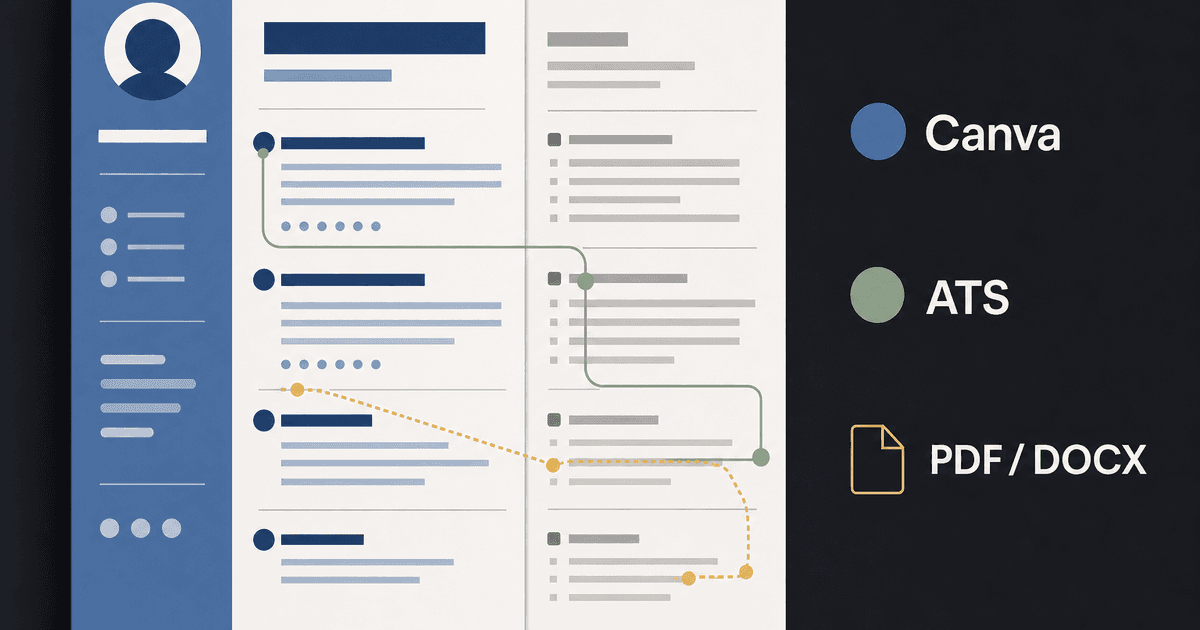
careerBy Pika Resume Team | Jul 12, 2026
Canva Resume Builder vs ATS Reality Check
By Pika Resume Team | Jul 12, 2026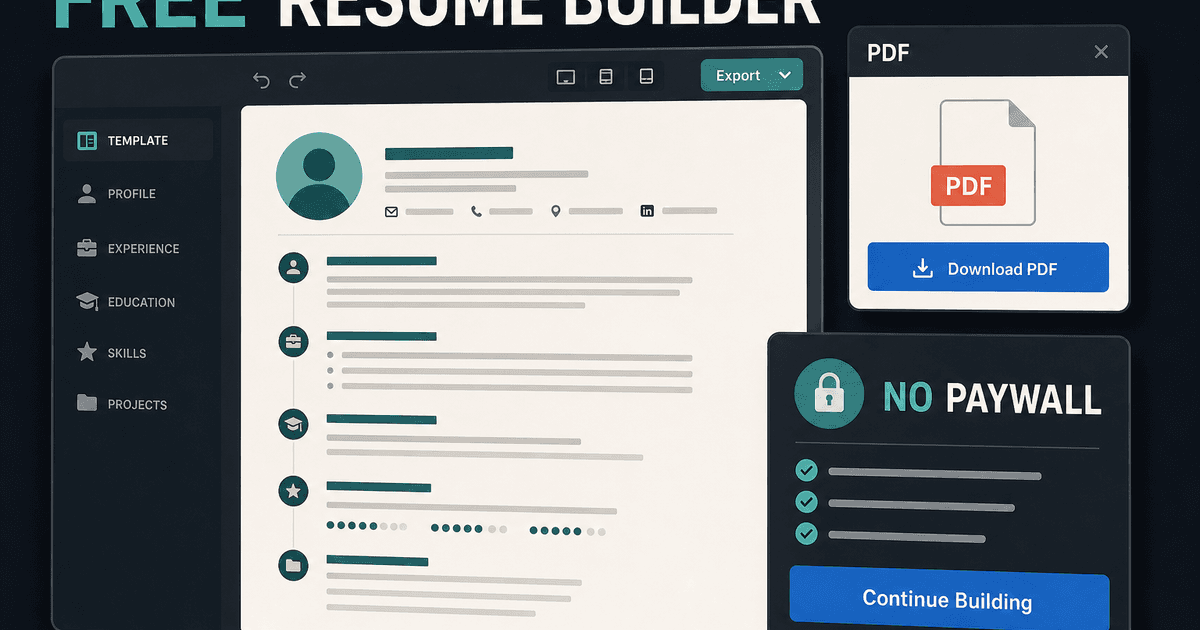
careerBy Pika Resume Team | Jul 9, 2026
Free resume builder: what makes one worth using
By Pika Resume Team | Jul 9, 2026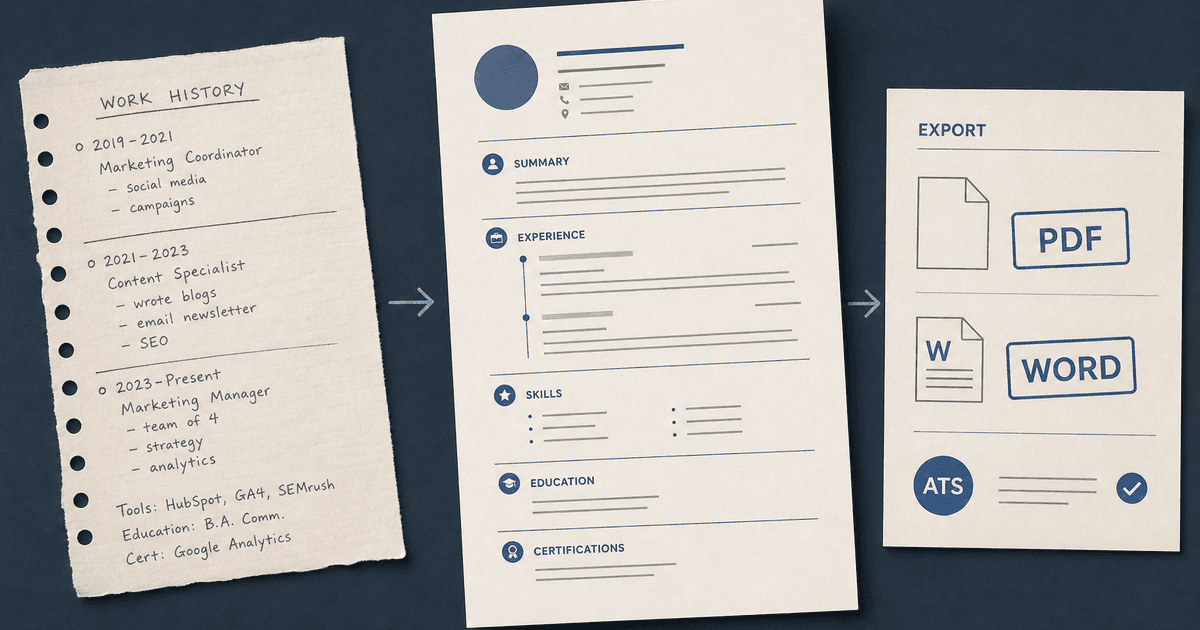
careerBy Pika Resume Team | Jul 6, 2026
Resume Builder: What It Actually Does for Job Seekers
By Pika Resume Team | Jul 6, 2026
resume tipsBy Pika Resume Team | Jun 20, 2026
The Resume Sections Most People Get Wrong (and How to Fix Each One)
By Pika Resume Team | Jun 20, 2026resume tipsBy Pika Resume Team | Jun 18, 2026
How to Edit a PDF Resume Without Wrecking the Formatting
By Pika Resume Team | Jun 18, 2026resume reviewBy Pika Resume Team | Jun 16, 2026
AI Resume Feedback vs a Human Expert Review: When Each Is Worth It
By Pika Resume Team | Jun 16, 2026atsBy Pika Resume Team | Jun 14, 2026
What an ATS Actually Does to Your Resume (and the 8 Things It Scores)
By Pika Resume Team | Jun 14, 2026resume tipsBy Pika Resume Team | Jun 12, 2026
How to Tailor Your Resume to a Job Description in 2026 (the 3-Pass Method)
By Pika Resume Team | Jun 12, 2026resumeBy Gargi Chaudhari | May 30, 2026
Resume vs Biodata vs CV: Which One Do You Actually Need?
By Gargi Chaudhari | May 30, 2026resumeBy Astha Narang | May 28, 2026
10 Software Engineer Resume Examples That Got Interviews (2026)
By Astha Narang | May 28, 2026resumeBy Gargi Chaudhari | May 26, 2026
How to Convert a LinkedIn Profile to a Resume or CV
By Gargi Chaudhari | May 26, 2026resumeBy Astha Narang | May 23, 2026
Best Resume Format for Indian IT Services Companies (TCS, Infosys, Wipro, Accenture)
By Astha Narang | May 23, 2026resumeBy Gargi Chaudhari | May 21, 2026
The Complete Guide to ATS Resume Screening in India (2026)
By Gargi Chaudhari | May 21, 2026resumeBy Astha Narang | May 19, 2026
Hobbies and Interests for Resume: Should You Include Them?
By Astha Narang | May 19, 2026resumeBy Gargi Chaudhari | May 14, 2026
How to Write a Resume Headline That Gets Recruiter Calls on Naukri
By Gargi Chaudhari | May 14, 2026interviewBy Astha Narang | May 8, 2026
Decoding Interviewer Psychology: What They Don't Tell You for Your Next Job
By Astha Narang | May 8, 2026resumeBy Gargi Chaudhari | May 7, 2026
Career Objective for Resume: 50+ Fresher Examples (2026)
By Gargi Chaudhari | May 7, 2026resumeBy Astha Narang | May 6, 2026
7 Dangerous ATS Myths Debunked: What Actually Gets You Hired in 2026
By Astha Narang | May 6, 2026resumeBy Astha Narang | May 4, 2026
Master Your Resume: The Ultimate Guide to Listing Computer Skills
By Astha Narang | May 4, 2026resumeBy Astha Narang | Apr 29, 2026
4 Sales Resume Examples for SDR, Account Executive & Manager (2026)
By Astha Narang | Apr 29, 2026resumeBy Astha Narang | Apr 29, 2026
4 Data Analyst Resume Examples for 2026 (Entry-Level to Senior)
By Astha Narang | Apr 29, 2026resumeBy Astha Narang | Apr 24, 2026
Resume Tips for 2026: The Ultimate Guide to Landing Interviews
By Astha Narang | Apr 24, 2026resumeBy Astha Narang | Apr 22, 2026
Bad Resume vs. Good Resume: A Side-by-Side Comparison for Job Seekers
By Astha Narang | Apr 22, 2026resumeBy Astha Narang | Apr 20, 2026
How to Add LinkedIn to Your Resume the Right Way in 2026
By Astha Narang | Apr 20, 2026resumeBy Astha Narang | Apr 17, 2026
7 Common Resume Mistakes to Avoid in 2026 (and How to Fix Them)
By Astha Narang | Apr 17, 2026resumeBy Pika Resume Team | Apr 15, 2026
Master Your LinkedIn-to-Resume Link: A 2026 Guide for Top Candidates
By Pika Resume Team | Apr 15, 2026resumeBy Astha Narang | Apr 13, 2026
How to Write a Winning Resume Summary That Grabs Recruiter Attention
By Astha Narang | Apr 13, 2026careerBy Astha Narang | Apr 11, 2026
Owning Your Career Break: How to Frame a Gap Year on Your Resume in 2026
By Astha Narang | Apr 11, 2026resumeBy Astha Narang | Apr 8, 2026
The Complete 2026 Resume Guide: Crafting a Job-Winning Document
By Astha Narang | Apr 8, 2026resumeBy Astha Narang | Apr 4, 2026
Beat the ATS: Optimize Your Resume for Applicant Tracking Systems in 2026
By Astha Narang | Apr 4, 2026resumeBy Astha Narang | Mar 30, 2026
Expert Resume Review: Is It Worth the Investment for Your Career?
By Astha Narang | Mar 30, 2026resumeBy Astha Narang | Mar 27, 2026
How Many References Should You Have on Your Resume?
By Astha Narang | Mar 27, 2026resumeBy Astha Narang | Mar 25, 2026
Master the 30-Second Resume Scan: Expert & Recruiter Insights
By Astha Narang | Mar 25, 2026resumeBy Astha Narang | Mar 24, 2026
How to Explain Employment Gaps on Your Resume & Ace Interviews
By Astha Narang | Mar 24, 2026resumeBy Astha Narang | Mar 20, 2026
Master Resume Keywords: Your Guide to ATS Success
By Astha Narang | Mar 20, 2026careerBy Astha Narang | Mar 18, 2026
How to Stand Out in Interviews While Still Being Authentic
By Astha Narang | Mar 18, 2026careerBy Astha Narang | Mar 14, 2026
Why Sending the Same Resume to Every Job is Costing You Interviews
By Astha Narang | Mar 14, 2026resumeBy Astha Narang | Mar 12, 2026
The Dynamic Duo: Why AI + Human Expertise is the 2026 Career Cheat Code
By Astha Narang | Mar 12, 2026careerBy Astha Narang | Mar 9, 2026
Get Your Resume Roasted Using PIKA AI
By Astha Narang | Mar 9, 2026jobBy Astha Narang | Mar 7, 2026
How to Show a Promotion on Your Resume? (And Why Most People Get It Wrong)
By Astha Narang | Mar 7, 2026careerBy Astha Narang | Mar 6, 2026
Should You Put Your Address on Your Resume in 2026?
By Astha Narang | Mar 6, 2026careerBy Astha Narang | Mar 3, 2026
Is It Illegal to Lie on a Resume? What Actually Happens in 2026
By Astha Narang | Mar 3, 2026jobBy Pika Resume Team | Feb 5, 2026
How to Optimize Your Resume for Remote Job Applications
By Pika Resume Team | Feb 5, 2026interviewBy Pika Resume Team | Feb 1, 2026
How to Write an ATS-Friendly Resume in 2026
By Pika Resume Team | Feb 1, 2026cover-letterBy Pika Resume Team | Jan 25, 2026
Top 7 Cover Letter Mistakes That Cost You the Interview
By Pika Resume Team | Jan 25, 2026resumeBy Pika Resume Team | Jan 18, 2026
AI Resume Builders: A Complete Guide for Job Seekers in 2026
By Pika Resume Team | Jan 18, 2026jobBy Pika Resume Team | Jan 10, 2026
Resume Tips for Career Changers: Making a Smooth Transition
By Pika Resume Team | Jan 10, 2026careerBy Pika Resume Team | Jan 3, 2026
The Power of Keywords in Your Resume: An SEO Approach to Job Applications
By Pika Resume Team | Jan 3, 2026