
Resume Tips for Career Changers: Making a Smooth Transition
Switching careers? Learn how to reframe your experience, highlight transferable skills, and craft a resume that convinces hiring managers you're the right fit — even without direct experience.
 Published by Pika Resume Team|January 10, 2026|7 min read
Changing careers is one of the bravest professional moves you can make. But it comes with a unique challenge: how do you convince an employer to take a chance on you when your resume screams "different industry"?
The answer isn't to hide your past — it's to reframe it. Here's how to build a resume that bridges the gap between where you've been and where you want to go.
Why Traditional Resumes Don't Work for Career Changers
A conventional chronological resume works great when your career follows a linear path. But when you're switching from teaching to UX design, or from finance to product management, a traditional format can actually hurt you:
- It emphasizes irrelevant job titles
- It buries transferable skills
- It makes the "gap" between industries feel larger than it is
- It invites the recruiter to think "wrong fit" instead of "fresh perspective"
You need a different strategy.
Choose the Right Resume Format
For career changers, the combination (hybrid) resume format works best. It combines elements of both chronological and functional formats:
- Professional Summary — Your career change story in 3-4 sentences
- Core Competencies — Transferable skills front and center
- Relevant Experience — Reframed achievements that map to the new role
- Additional Experience — Brief mention of other roles
- Education & Certifications — Including any new learning
This structure lets you lead with relevance rather than chronology.
Crafting Your Career Change Summary
Your professional summary is the most important section of a career change resume. It needs to:
- Acknowledge your transition (briefly, positively)
- Highlight transferable value
- Show enthusiasm and commitment to the new field
Example Summaries
Teacher → UX Designer:
"Former educator with 8 years of experience in curriculum design and user-centered learning experiences, now transitioning to UX design. Completed Google UX Design Certificate and built a portfolio of 5 case studies. Brings deep expertise in understanding diverse user needs, conducting research, and creating intuitive experiences."
Sales → Product Management:
"Customer-focused sales professional with 6 years of B2B SaaS experience, transitioning to product management. Proven track record of translating customer needs into actionable insights, collaborating with engineering teams on feature requests, and driving $3M+ in annual revenue. Certified Scrum Product Owner with a passion for building products users love."
Finance → Data Science:
"Analytical finance professional with 5 years of experience in quantitative modeling and data-driven decision making, pivoting to data science. Completed IBM Data Science Professional Certificate and built predictive models using Python and SQL. Combines deep statistical knowledge with business acumen to drive actionable insights."
Identifying and Showcasing Transferable Skills
Every career has skills that cross industry boundaries. The key is identifying and articulating them in the language of your target industry.
Common Transferable Skills
| From Any Career | Maps To |
|---|---|
| Managing budgets | Financial planning, resource allocation |
| Leading teams | People management, cross-functional leadership |
| Client communication | Stakeholder management, user research |
| Process improvement | Operations optimization, workflow design |
| Data analysis | Business intelligence, analytics |
| Project coordination | Project management, agile delivery |
| Training others | Knowledge transfer, documentation |
| Problem-solving | Strategic thinking, troubleshooting |
How to Reframe Your Experience
The magic is in how you describe your achievements. Here's the process:
Step 1: Look at job descriptions in your target field and identify the key skills they require.
Step 2: For each skill, think about times you've demonstrated it — even in a different context.
Step 3: Rewrite your bullet points using the terminology of your target industry.
Before (Teacher applying for UX role):
- Created lesson plans for 25+ students with diverse learning needs
After (Reframed for UX):
- Designed user-centered learning experiences for 25+ users with diverse needs, iterating based on feedback and performance data to improve engagement by 40%
Notice how the core achievement is the same, but the language maps to UX design.
Building Credibility for Your New Career
You need to show you're serious about the transition. Here are the most effective ways:
1. Get Certified
Relevant certifications signal commitment. Some high-impact options:
- Tech: Google Certificates (UX, Data Analytics, IT Support, Project Management)
- Marketing: HubSpot Academy, Google Analytics
- Product: Product School, Pragmatic Institute
- Data: IBM Data Science, AWS Certifications
2. Build a Portfolio
For creative and technical fields, a portfolio speaks louder than a resume:
- Create case studies from personal or volunteer projects
- Contribute to open-source projects
- Document your learning journey
- Redesign existing products as practice
3. Volunteer or Freelance
Get real-world experience in your new field:
- Offer pro-bono services to nonprofits
- Take on freelance projects through Upwork or Fiverr
- Volunteer for cross-functional projects at your current company
- Join hackathons or design challenges
4. Network Strategically
Your network is your net worth during a career change:
- Join industry communities (Slack groups, subreddits, meetups)
- Connect with career changers who've made similar transitions
- Reach out for informational interviews
- Share your journey on LinkedIn
Addressing the Career Change in Your Cover Letter
Your resume reframes your experience; your cover letter explains your why. Key elements:
- Open with passion for the new field
- Connect the dots between your past and future
- Address the obvious — yes, your background is different, and here's why that's an advantage
- Show proof of commitment (certifications, projects, volunteer work)
- Close with confidence — you're not apologizing for changing careers
Common Career Change Resume Mistakes
Mistake 1: Hiding Your Previous Career
Your past experience is an asset. A product manager who used to be a nurse brings unique empathy. A marketer who used to be an engineer understands the product deeply. Don't hide it — leverage it.
Mistake 2: Only Listing New Credentials
Certifications help, but without context, they're just letters. Combine new skills with proven achievements from your career.
Mistake 3: Being Vague About the Transition
Don't leave the recruiter guessing. Be clear about your career change in your summary and let your resume tell a coherent story.
Mistake 4: Applying Without Tailoring
Career changers need to tailor even more than traditional candidates. Every bullet point should bridge the gap between your experience and the target role.
A Real Career Change Resume Structure
Here's how to organize your career change resume:
PROFESSIONAL SUMMARY
(3-4 sentences bridging old and new career)

CORE COMPETENCIES
(8-12 transferable skills in a clean grid)

RELEVANT PROJECTS & EXPERIENCE
(Portfolio projects, freelance work, volunteer roles)

PROFESSIONAL EXPERIENCE
(Previous roles with reframed bullet points)

EDUCATION & CERTIFICATIONS
(Degrees + new certifications)

TECHNICAL SKILLS
(New tools and technologies you've learned)
Final Thoughts
Career changes are increasingly common — the average person will change careers 5-7 times during their working life. Employers are more open to non-linear paths than ever before, but your resume needs to tell a compelling story.
The winning formula:
- Lead with relevance, not chronology
- Translate your experience into the new industry's language
- Show commitment through certifications, projects, and learning
- Tell a cohesive story that makes the transition feel natural
Your diverse background isn't a weakness — it's your superpower. You bring perspectives and skills that career-long insiders don't have. Make sure your resume communicates that.
Making a career change? Pika Resume helps you build a resume that highlights your transferable skills and tells your career story compellingly. Start building for free.


Create your Resume
Your resume is an extension of you. Make it truly yours.
Related Articles
Related guides & tools
Free AI Resume BuilderBuild a tailored, ATS-friendly resume from scratchFree Resume TemplatesChoose a professional layout for your roleATS Resume CheckerCheck your score, parsing and issues before you applyOnline CV MakerCreate a CV with guided sections and templatesOnline Resume EditorEdit an existing PDF without rebuilding its layoutHobbies for ResumeSkills for ResumeLinkedIn to ResumeResume Examples
Continue Reading
Check more recommended readings to get the job of your dreams.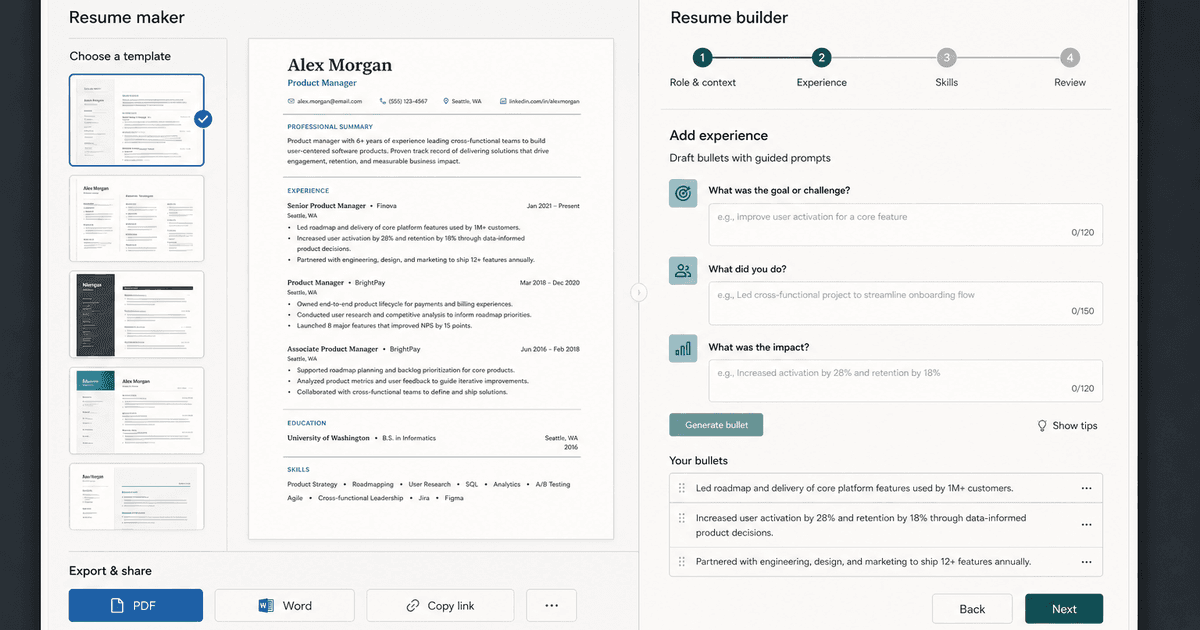
careerBy Pika Resume Team | Aug 3, 2026
Resume Maker vs Resume Builder: Which Should Job Seekers Use?
By Pika Resume Team | Aug 3, 2026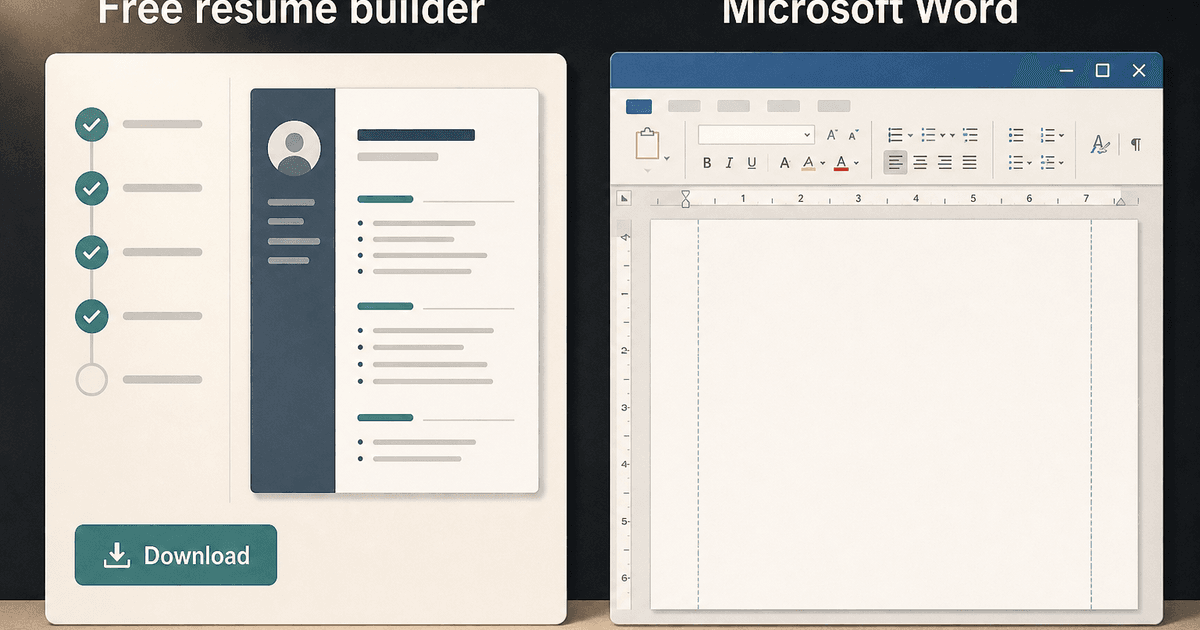
careerBy Pika Resume Team | Aug 2, 2026
Free Resume Builder and Download vs Microsoft Word
By Pika Resume Team | Aug 2, 2026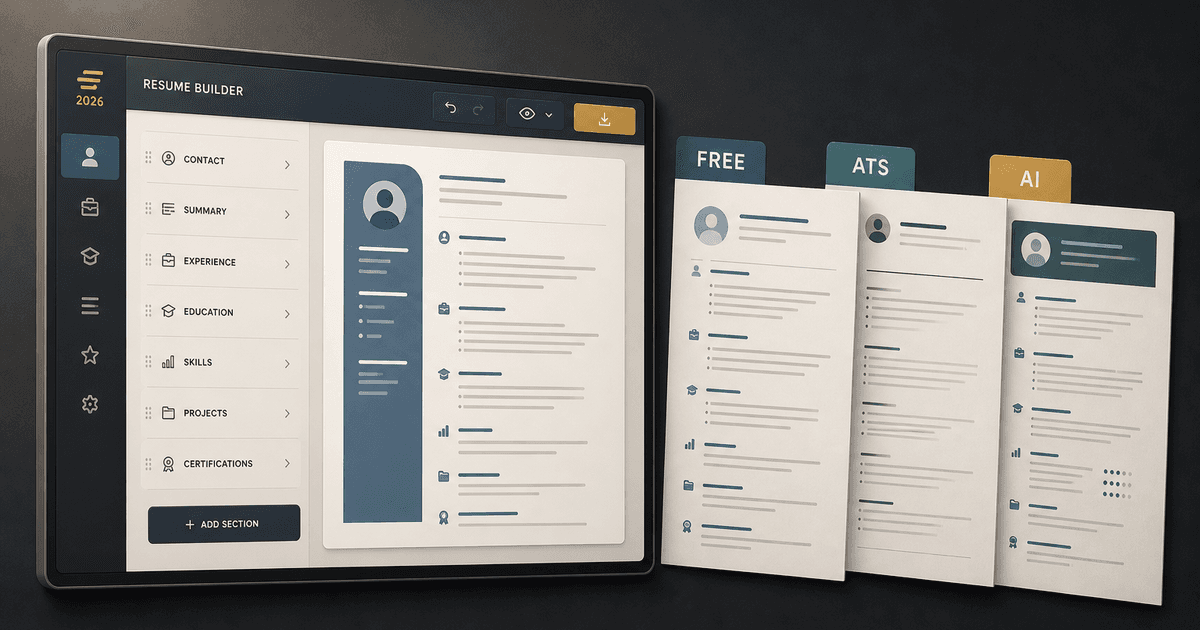
careerBy Pika Resume Team | Jul 30, 2026
What Is the Best Resume Builder Website for 2026?
By Pika Resume Team | Jul 30, 2026
careerBy Pika Resume Team | Jul 27, 2026
How to Cancel Resume Builder Subscription Without Surprises
By Pika Resume Team | Jul 27, 2026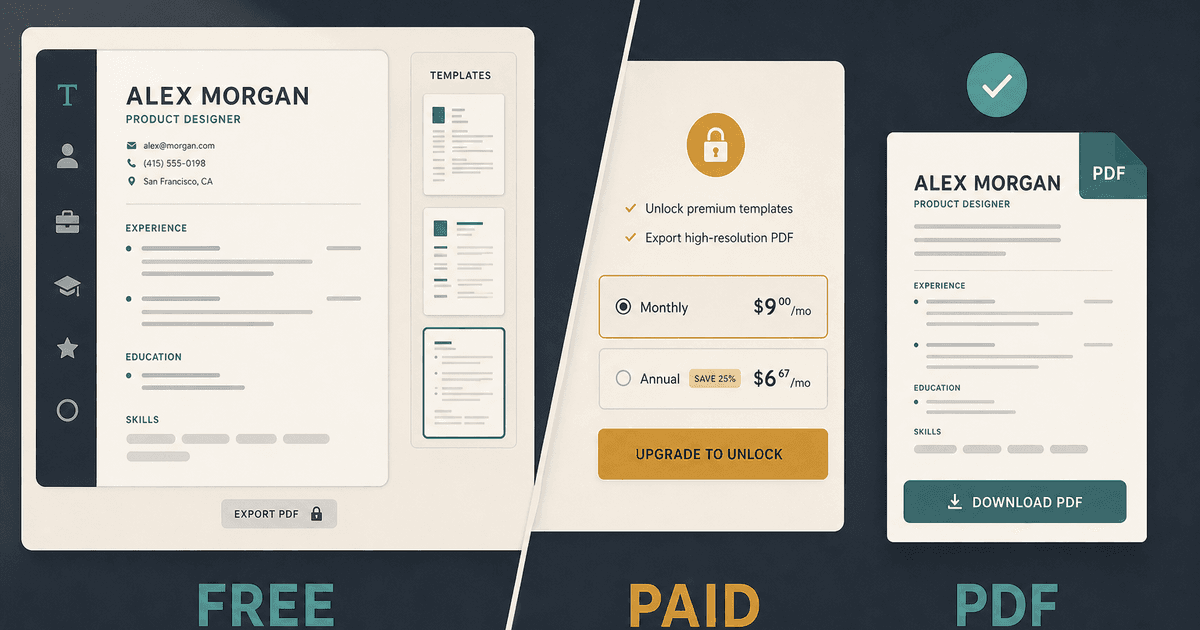
careerBy Pika Resume Team | Jul 26, 2026
How Much Is Resume Builder? Free vs Paid Explained
By Pika Resume Team | Jul 26, 2026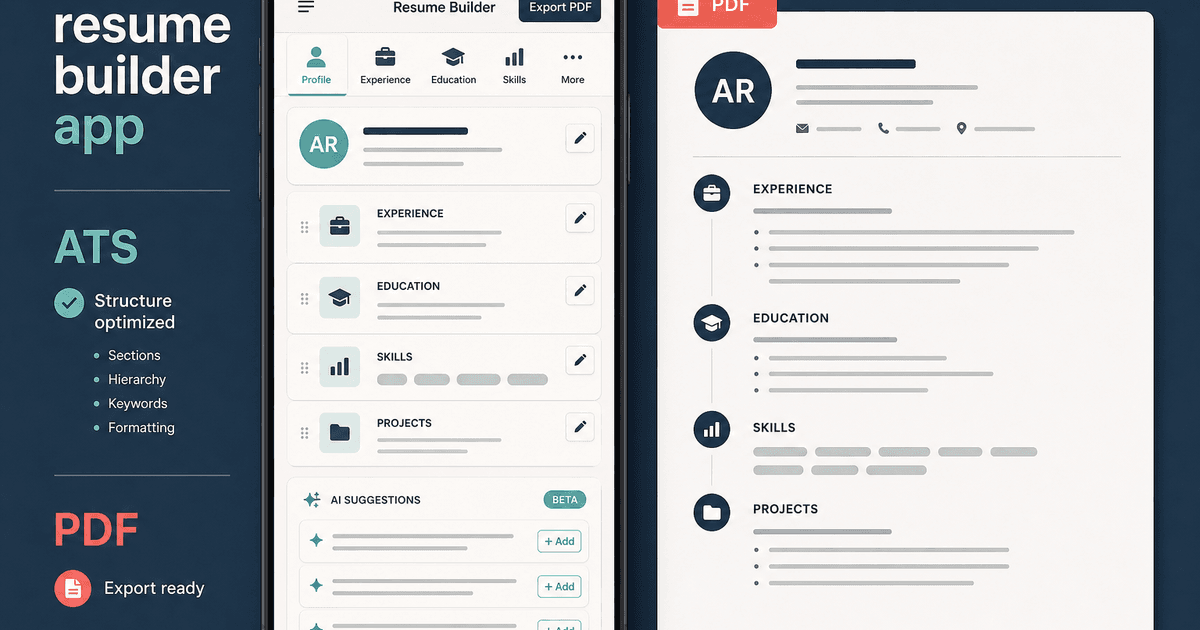
careerBy Pika Resume Team | Jul 20, 2026
Resume Builder App: What the Best One Lets You Do
By Pika Resume Team | Jul 20, 2026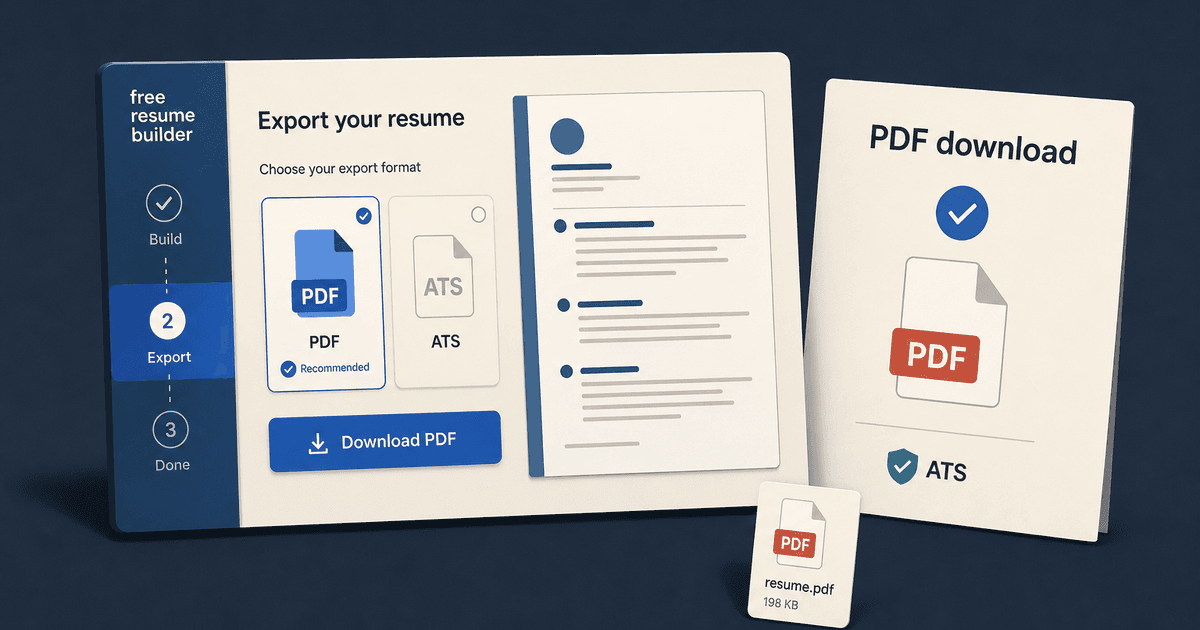
careerBy Pika Resume Team | Jul 19, 2026
Free Resume Builder and Download: Compare the Best Options
By Pika Resume Team | Jul 19, 2026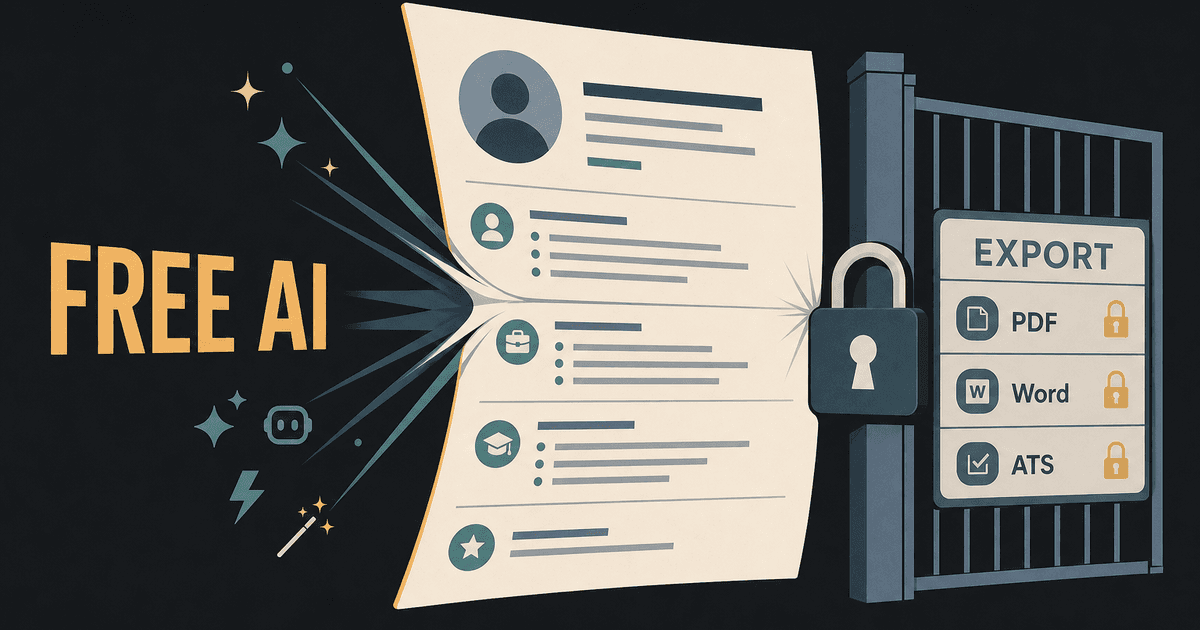
careerBy Pika Resume Team | Jul 16, 2026
Free AI Resume Builder: What It Does Well and Fails At
By Pika Resume Team | Jul 16, 2026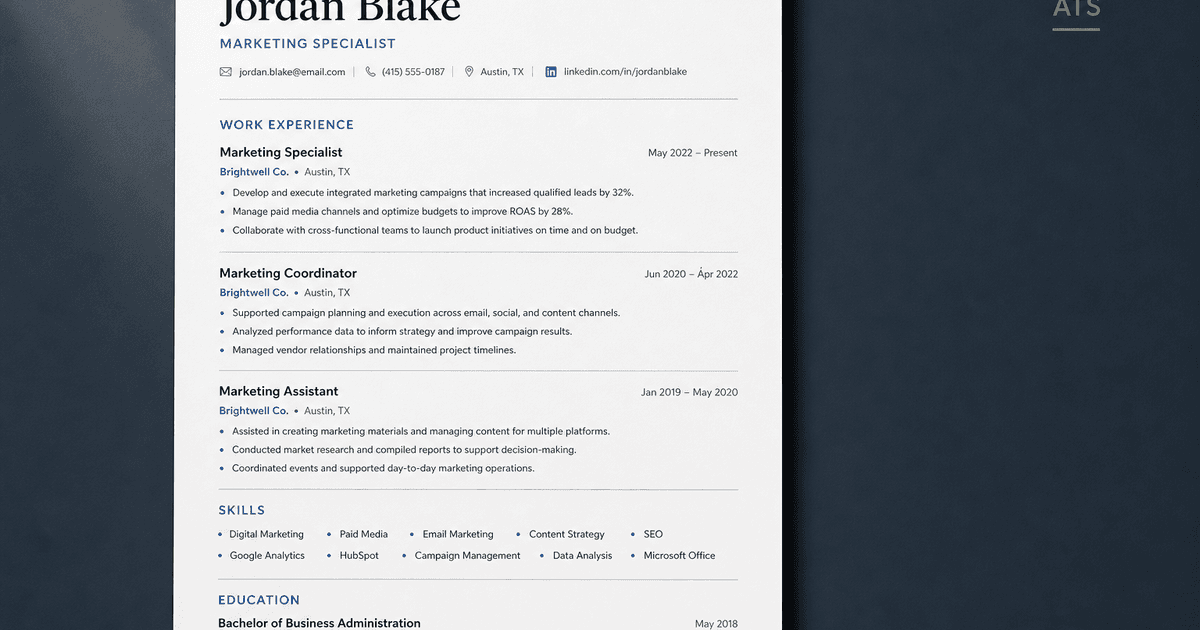
careerBy Pika Resume Team | Jul 13, 2026
Resume format for ATS: a simple guide that works
By Pika Resume Team | Jul 13, 2026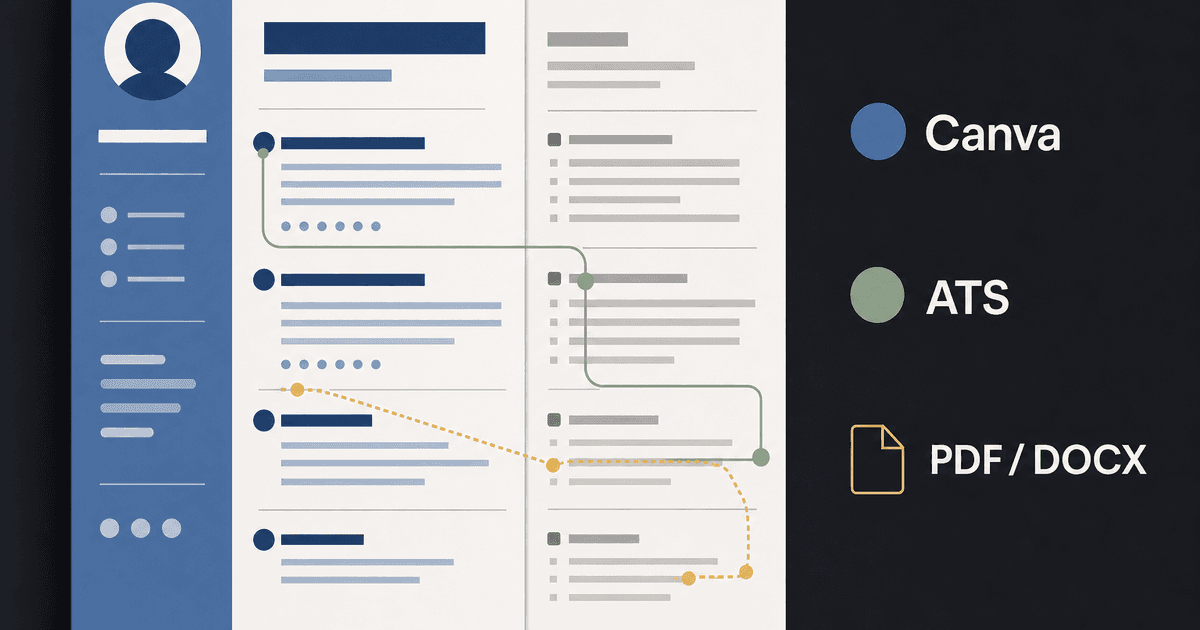
careerBy Pika Resume Team | Jul 12, 2026
Canva Resume Builder vs ATS Reality Check
By Pika Resume Team | Jul 12, 2026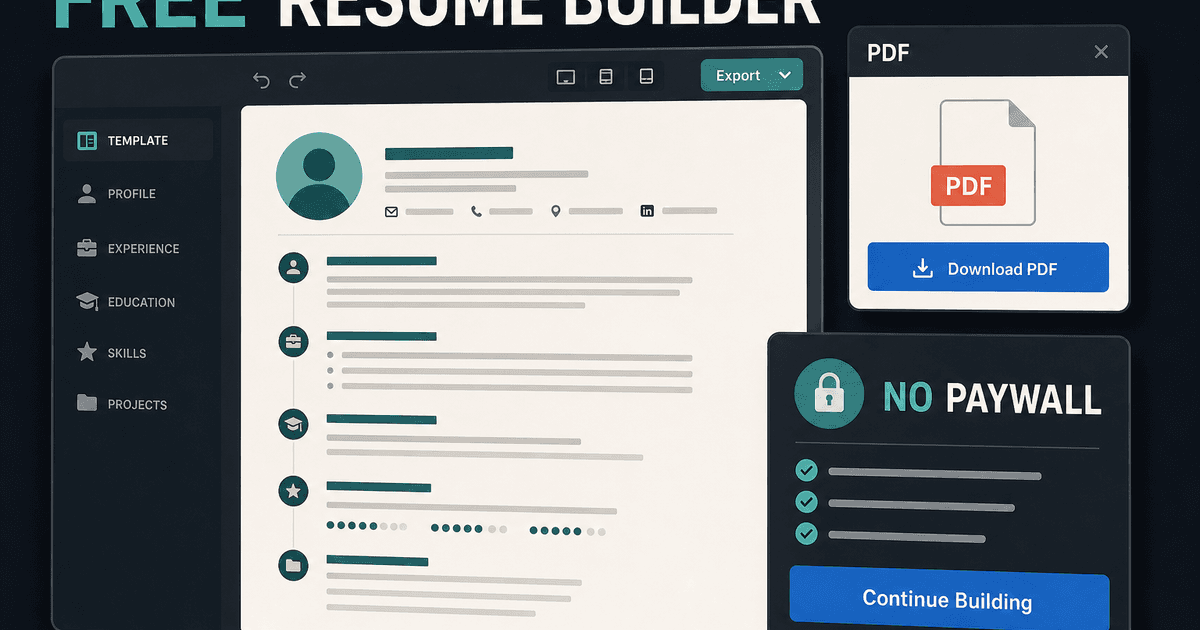
careerBy Pika Resume Team | Jul 9, 2026
Free resume builder: what makes one worth using
By Pika Resume Team | Jul 9, 2026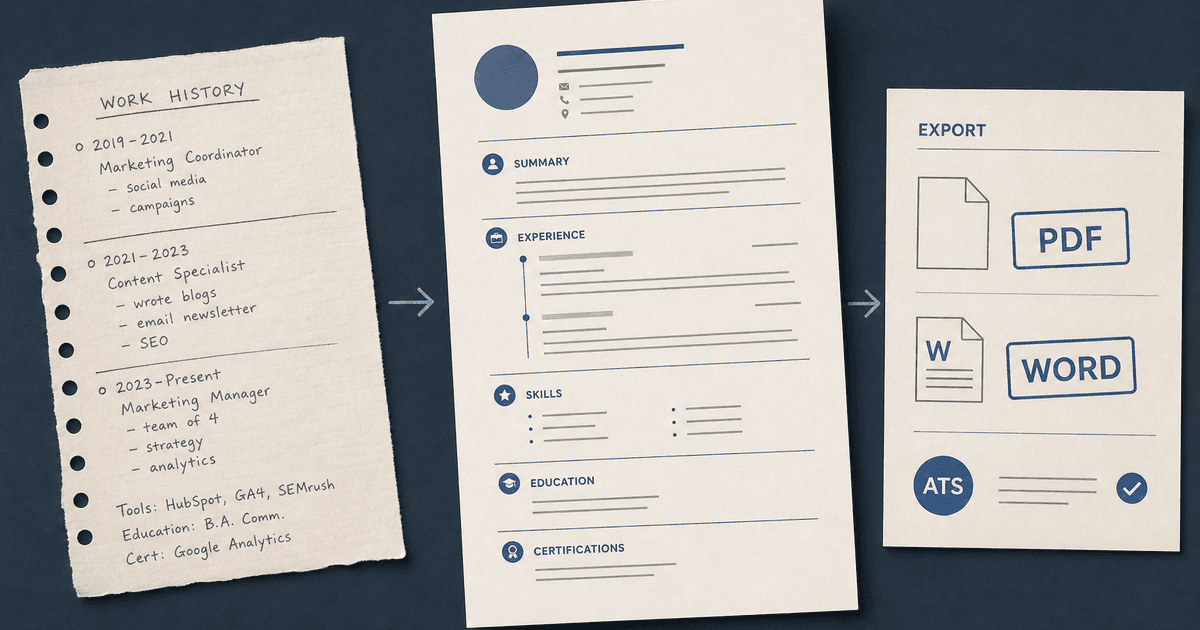
careerBy Pika Resume Team | Jul 6, 2026
Resume Builder: What It Actually Does for Job Seekers
By Pika Resume Team | Jul 6, 2026
resume tipsBy Pika Resume Team | Jun 20, 2026
The Resume Sections Most People Get Wrong (and How to Fix Each One)
By Pika Resume Team | Jun 20, 2026resume tipsBy Pika Resume Team | Jun 18, 2026
How to Edit a PDF Resume Without Wrecking the Formatting
By Pika Resume Team | Jun 18, 2026resume reviewBy Pika Resume Team | Jun 16, 2026
AI Resume Feedback vs a Human Expert Review: When Each Is Worth It
By Pika Resume Team | Jun 16, 2026atsBy Pika Resume Team | Jun 14, 2026
What an ATS Actually Does to Your Resume (and the 8 Things It Scores)
By Pika Resume Team | Jun 14, 2026resume tipsBy Pika Resume Team | Jun 12, 2026
How to Tailor Your Resume to a Job Description in 2026 (the 3-Pass Method)
By Pika Resume Team | Jun 12, 2026resumeBy Gargi Chaudhari | May 30, 2026
Resume vs Biodata vs CV: Which One Do You Actually Need?
By Gargi Chaudhari | May 30, 2026resume By Astha Narang | May 28, 2026
10 Software Engineer Resume Examples That Got Interviews (2026)
By Astha Narang | May 28, 2026resumeBy Gargi Chaudhari | May 26, 2026
How to Convert a LinkedIn Profile to a Resume or CV
By Gargi Chaudhari | May 26, 2026resumeBy Astha Narang | May 23, 2026
Best Resume Format for Indian IT Services Companies (TCS, Infosys, Wipro, Accenture)
By Astha Narang | May 23, 2026resumeBy Gargi Chaudhari | May 21, 2026
The Complete Guide to ATS Resume Screening in India (2026)
By Gargi Chaudhari | May 21, 2026resumeBy Astha Narang | May 19, 2026
Hobbies and Interests for Resume: Should You Include Them?
By Astha Narang | May 19, 2026resumeBy Gargi Chaudhari | May 14, 2026
How to Write a Resume Headline That Gets Recruiter Calls on Naukri
By Gargi Chaudhari | May 14, 2026interviewBy Astha Narang | May 8, 2026
Decoding Interviewer Psychology: What They Don't Tell You for Your Next Job
By Astha Narang | May 8, 2026resumeBy Gargi Chaudhari | May 7, 2026
Career Objective for Resume: 50+ Fresher Examples (2026)
By Gargi Chaudhari | May 7, 2026resumeBy Astha Narang | May 6, 2026
7 Dangerous ATS Myths Debunked: What Actually Gets You Hired in 2026
By Astha Narang | May 6, 2026resumeBy Astha Narang | May 4, 2026
Master Your Resume: The Ultimate Guide to Listing Computer Skills
By Astha Narang | May 4, 2026resumeBy Astha Narang | Apr 29, 2026
4 Sales Resume Examples for SDR, Account Executive & Manager (2026)
By Astha Narang | Apr 29, 2026resumeBy Astha Narang | Apr 29, 2026
4 Data Analyst Resume Examples for 2026 (Entry-Level to Senior)
By Astha Narang | Apr 29, 2026resumeBy Astha Narang | Apr 24, 2026
Resume Tips for 2026: The Ultimate Guide to Landing Interviews
By Astha Narang | Apr 24, 2026resumeBy Astha Narang | Apr 22, 2026
Bad Resume vs. Good Resume: A Side-by-Side Comparison for Job Seekers
By Astha Narang | Apr 22, 2026resumeBy Astha Narang | Apr 20, 2026
How to Add LinkedIn to Your Resume the Right Way in 2026
By Astha Narang | Apr 20, 2026resumeBy Astha Narang | Apr 17, 2026
7 Common Resume Mistakes to Avoid in 2026 (and How to Fix Them)
By Astha Narang | Apr 17, 2026resumeBy Pika Resume Team | Apr 15, 2026
Master Your LinkedIn-to-Resume Link: A 2026 Guide for Top Candidates
By Pika Resume Team | Apr 15, 2026resumeBy Astha Narang | Apr 13, 2026
How to Write a Winning Resume Summary That Grabs Recruiter Attention
By Astha Narang | Apr 13, 2026careerBy Astha Narang | Apr 11, 2026
Owning Your Career Break: How to Frame a Gap Year on Your Resume in 2026
By Astha Narang | Apr 11, 2026resumeBy Astha Narang | Apr 8, 2026
The Complete 2026 Resume Guide: Crafting a Job-Winning Document
By Astha Narang | Apr 8, 2026resumeBy Astha Narang | Apr 4, 2026
Beat the ATS: Optimize Your Resume for Applicant Tracking Systems in 2026
By Astha Narang | Apr 4, 2026resumeBy Astha Narang | Mar 30, 2026
Expert Resume Review: Is It Worth the Investment for Your Career?
By Astha Narang | Mar 30, 2026resumeBy Astha Narang | Mar 25, 2026
Master the 30-Second Resume Scan: Expert & Recruiter Insights
By Astha Narang | Mar 25, 2026resumeBy Astha Narang | Mar 24, 2026
How to Explain Employment Gaps on Your Resume & Ace Interviews
By Astha Narang | Mar 24, 2026resumeBy Astha Narang | Mar 20, 2026
Master Resume Keywords: Your Guide to ATS Success
By Astha Narang | Mar 20, 2026careerBy Astha Narang | Mar 18, 2026
How to Stand Out in Interviews While Still Being Authentic
By Astha Narang | Mar 18, 2026careerBy Astha Narang | Mar 14, 2026
Why Sending the Same Resume to Every Job is Costing You Interviews
By Astha Narang | Mar 14, 2026resumeBy Astha Narang | Mar 12, 2026
The Dynamic Duo: Why AI + Human Expertise is the 2026 Career Cheat Code
By Astha Narang | Mar 12, 2026careerBy Astha Narang | Mar 9, 2026
Get Your Resume Roasted Using PIKA AI
By Astha Narang | Mar 9, 2026jobBy Astha Narang | Mar 7, 2026
How to Show a Promotion on Your Resume? (And Why Most People Get It Wrong)
By Astha Narang | Mar 7, 2026careerBy Astha Narang | Mar 6, 2026
Should You Put Your Address on Your Resume in 2026?
By Astha Narang | Mar 6, 2026careerBy Astha Narang | Mar 3, 2026
Is It Illegal to Lie on a Resume? What Actually Happens in 2026
By Astha Narang | Mar 3, 2026jobBy Pika Resume Team | Feb 5, 2026
How to Optimize Your Resume for Remote Job Applications
By Pika Resume Team | Feb 5, 2026interviewBy Pika Resume Team | Feb 1, 2026
How to Write an ATS-Friendly Resume in 2026
By Pika Resume Team | Feb 1, 2026cover-letterBy Pika Resume Team | Jan 25, 2026
Top 7 Cover Letter Mistakes That Cost You the Interview
By Pika Resume Team | Jan 25, 2026resumeBy Pika Resume Team | Jan 18, 2026
AI Resume Builders: A Complete Guide for Job Seekers in 2026
By Pika Resume Team | Jan 18, 2026jobBy Pika Resume Team | Jan 10, 2026
Resume Tips for Career Changers: Making a Smooth Transition
By Pika Resume Team | Jan 10, 2026careerBy Pika Resume Team | Jan 3, 2026
The Power of Keywords in Your Resume: An SEO Approach to Job Applications
By Pika Resume Team | Jan 3, 2026