
The Power of Keywords in Your Resume: An SEO Approach to Job Applications
Just like websites need SEO to rank on Google, your resume needs keyword optimization to rank in hiring systems. Learn the strategic approach to resume keywords that gets results.
 Published by Pika Resume Team|January 3, 2026|7 min read
If you've ever wondered why your perfectly crafted resume seems to disappear into a black hole after you click "Submit," the answer might be simpler than you think: keywords.
Just as websites use SEO (Search Engine Optimization) to rank on Google, your resume needs keyword optimization to rank in Applicant Tracking Systems. Let's explore this parallel and learn how to apply SEO thinking to your job search.
The Resume-SEO Parallel
Think of the job market like a search engine:
- Your resume = a web page
- The ATS = Google's algorithm
- The recruiter = the searcher
- Keywords = search queries
- Getting an interview = ranking on page one
Just as a webpage won't rank without the right keywords, your resume won't surface without the terms employers are searching for.
What Makes a Keyword?
Resume keywords fall into several categories:
- Hard skills: Specific, teachable abilities (Python, Salesforce, AutoCAD)
- Soft skills: Interpersonal qualities (Leadership, Communication, Strategic Thinking)
- Job titles: Current and previous roles (Product Manager, Software Engineer)
- Industry terms: Domain-specific language (Agile, KPI, ROI, UX/UI)
- Certifications: Professional credentials (PMP, CPA, AWS Certified)
- Tools & technologies: Platforms and software (Jira, Figma, Tableau)
- Action verbs: Achievement-oriented words (Spearheaded, Implemented, Optimized)
How to Find the Right Keywords
Method 1: Analyze the Job Description
The job posting is your keyword goldmine. Here's a systematic approach:
- Copy the entire job description into a document
- Highlight every skill, tool, and qualification mentioned
- Note frequency — words mentioned multiple times are high-priority
- Categorize into must-haves vs. nice-to-haves
- Map each keyword to your actual experience
Method 2: Research Multiple Postings
Don't rely on a single job description. Look at 5-10 similar roles across different companies:
- What skills appear consistently?
- What tools are industry-standard?
- What qualifications are universal vs. company-specific?
This gives you the "core keyword set" for your target role.
Method 3: Use Industry Resources
- LinkedIn Skills Insights: Shows trending skills for specific roles
- O*NET OnLine: Comprehensive occupation database with skill requirements
- Industry reports: Annual skill surveys from organizations in your field
- Job board filters: Indeed and LinkedIn show common keywords for job categories
Method 4: Analyze Successful Resumes
Look at LinkedIn profiles of people in your target role:
- What skills do they endorse?
- What language do they use in their experience section?
- What certifications do they hold?
Strategic Keyword Placement
Finding the right keywords is only half the battle. Where and how you place them matters enormously.
The Keyword Hierarchy
Not all positions in your resume carry equal weight. Here's how ATS systems typically prioritize:
- Job title / Professional headline — Highest weight
- Professional summary — High weight
- Skills section — High weight
- Work experience bullet points — Medium-high weight
- Education and certifications — Medium weight
Placement Best Practices
Professional Summary:
Weave in 4-6 of the most important keywords naturally:
"Results-driven product manager with 5+ years of experience in B2B SaaS. Expert in agile methodology, user research, and cross-functional leadership. Track record of shipping products that drive revenue growth and improve customer retention."
Skills Section:
Create a clean grid of 10-15 keywords:
Product Strategy    |  Agile/Scrum       |  User Research
Roadmap Planning    |  A/B Testing       |  SQL & Analytics
Stakeholder Mgmt    |  JIRA & Confluence |  OKR Framework
Market Analysis     |  API Integration   |  Customer Discovery
Experience Bullets:
Integrate keywords into achievement statements:
- "Led agile development team of 8 engineers, delivering product roadmap items 15% ahead of schedule using JIRA for sprint planning"
Advanced Keyword Strategies
1. Keyword Density (The Goldilocks Zone)
Like SEO, there's a sweet spot for keyword density in resumes:
- Too few: Your resume won't match enough criteria
- Too many: It reads as keyword-stuffed and unnatural
- Just right: Keywords appear 2-3 times each in relevant contexts
A good rule of thumb: if a keyword appears 3+ times in the job description, it should appear 2-3 times in your resume — in different sections and different contexts.
2. Long-Tail Keywords
In SEO, long-tail keywords are specific phrases that attract qualified traffic. The same concept applies to resumes:
- Short keyword: "Management"
- Long-tail keyword: "Cross-functional team management in a remote environment"
Long-tail keywords demonstrate depth and specificity that generic terms can't convey.
3. Keyword Variations and Synonyms
ATS systems have become sophisticated, but including variations is still smart:
- "Project Management" and "Program Management"
- "JavaScript" and "JS"
- "Customer Relationship Management" and "CRM"
- "Search Engine Optimization" and "SEO"
Include both the full term and the abbreviation at least once.
4. Contextual Keywords
Don't just list keywords — contextualize them:
Weak: Skills include data analysis, Python, and SQL
Strong: Built automated data analysis pipelines using Python and SQL, processing 2M+ records daily and reducing reporting time by 60%
Context turns a keyword from a tag into evidence.
Common Keyword Mistakes
1. Keyword Stuffing
Cramming every possible keyword into your resume makes it unreadable. If a human can tell you're keyword-stuffing, so can an ATS — and recruiters will definitely notice.
2. Using Keywords You Can't Back Up
Don't include "Machine Learning" in your skills if you can't discuss it in an interview. Keywords should reflect genuine capabilities.
3. Ignoring Soft Skill Keywords
Many job seekers focus exclusively on hard skills. But soft skill keywords like "stakeholder management," "strategic thinking," and "cross-functional collaboration" are increasingly important in ATS scoring.
4. Not Updating Keywords Regularly
The tech industry especially evolves fast. Keywords that were hot two years ago might be outdated now:
- "Big Data" → "Data Engineering"
- "Growth Hacking" → "Growth Marketing"
- "Digital Transformation" → "AI Integration"
Stay current with industry terminology.
Measuring Your Keyword Effectiveness
Just like SEO has analytics tools, you can measure your resume's keyword performance:
ATS Score Checkers
Several tools let you compare your resume against a job description:
- Upload your resume and the job posting
- Get a match percentage
- See which keywords you're missing
- Get suggestions for improvement
Track Your Results
Keep a spreadsheet tracking:
| Job Applied | Keywords Matched | ATS Score | Got Interview? |
|---|---|---|---|
| PM at Company A | 85% | High | Yes |
| PM at Company B | 60% | Medium | No |
| PM at Company C | 90% | High | Yes |
Over time, patterns emerge that help you refine your keyword strategy.
The Human Test
After optimizing for ATS, read your resume as a human would:
- Does it flow naturally?
- Does it tell a compelling story?
- Would you want to interview this person?
- Are the keywords integrated or awkwardly forced?
The best keyword-optimized resumes are indistinguishable from simply well-written ones.
Building Your Keyword Strategy: A Step-by-Step Plan
- Identify your target role and collect 5-10 job descriptions
- Extract keywords and rank by frequency and importance
- Map keywords to your experience — which ones can you genuinely claim?
- Place keywords strategically across all resume sections
- Write naturally — integrate keywords into achievement-oriented bullet points
- Test and score your resume against specific job descriptions
- Iterate based on results — refine keywords for each application
The Bottom Line
Keywords aren't a cheat code — they're a communication strategy. By speaking the same language as the job description and the ATS, you're simply ensuring your qualifications are understood by both machines and humans.
The most effective approach combines:
- Research to find the right keywords
- Strategy to place them effectively
- Authenticity to keep your resume genuine
- Testing to validate your approach
Master this, and you'll see a dramatic improvement in your interview rate.
Want to see how your resume's keywords stack up? Pika Resume analyzes your resume against job descriptions and shows you exactly which keywords to add for maximum impact.


Create your Resume
Your resume is an extension of you. Make it truly yours.
Related Articles
Related guides & tools
Free AI Resume BuilderBuild a tailored, ATS-friendly resume from scratchFree Resume TemplatesChoose a professional layout for your roleATS Resume CheckerCheck your score, parsing and issues before you applyOnline CV MakerCreate a CV with guided sections and templatesOnline Resume EditorEdit an existing PDF without rebuilding its layoutHobbies for ResumeSkills for ResumeLinkedIn to ResumeResume Examples
Continue Reading
Check more recommended readings to get the job of your dreams.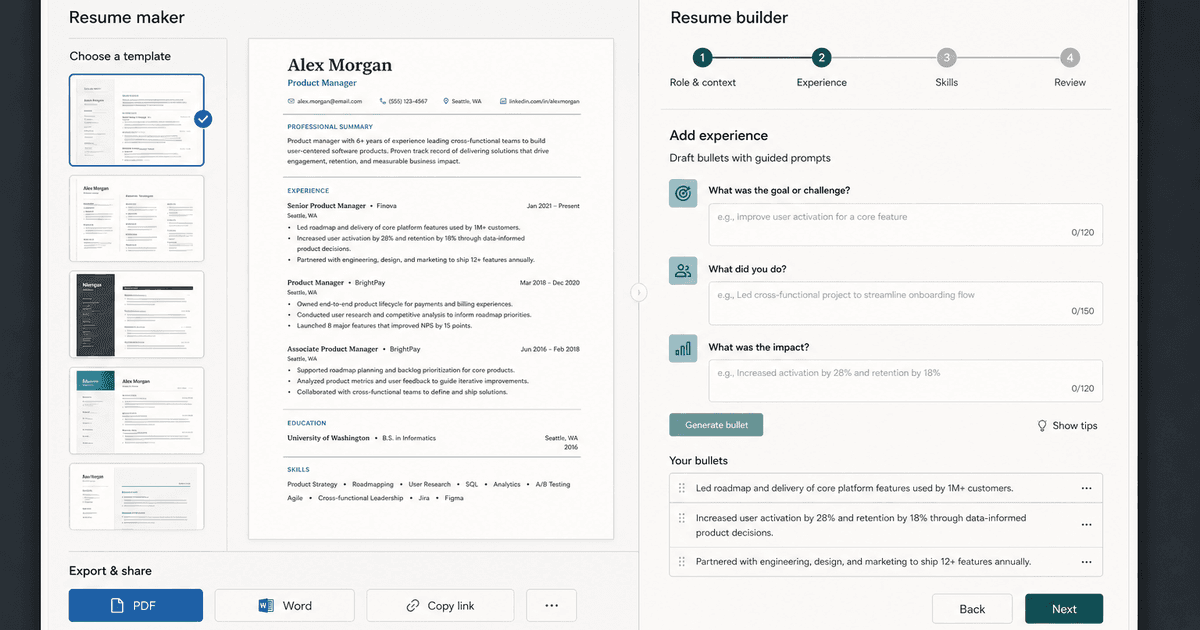
careerBy Pika Resume Team | Aug 3, 2026
Resume Maker vs Resume Builder: Which Should Job Seekers Use?
By Pika Resume Team | Aug 3, 2026
careerBy Pika Resume Team | Aug 2, 2026
Free Resume Builder and Download vs Microsoft Word
By Pika Resume Team | Aug 2, 2026
careerBy Pika Resume Team | Jul 30, 2026
What Is the Best Resume Builder Website for 2026?
By Pika Resume Team | Jul 30, 2026
careerBy Pika Resume Team | Jul 27, 2026
How to Cancel Resume Builder Subscription Without Surprises
By Pika Resume Team | Jul 27, 2026
careerBy Pika Resume Team | Jul 26, 2026
How Much Is Resume Builder? Free vs Paid Explained
By Pika Resume Team | Jul 26, 2026
careerBy Pika Resume Team | Jul 20, 2026
Resume Builder App: What the Best One Lets You Do
By Pika Resume Team | Jul 20, 2026
careerBy Pika Resume Team | Jul 19, 2026
Free Resume Builder and Download: Compare the Best Options
By Pika Resume Team | Jul 19, 2026
careerBy Pika Resume Team | Jul 16, 2026
Free AI Resume Builder: What It Does Well and Fails At
By Pika Resume Team | Jul 16, 2026
careerBy Pika Resume Team | Jul 13, 2026
Resume format for ATS: a simple guide that works
By Pika Resume Team | Jul 13, 2026
careerBy Pika Resume Team | Jul 12, 2026
Canva Resume Builder vs ATS Reality Check
By Pika Resume Team | Jul 12, 2026
careerBy Pika Resume Team | Jul 9, 2026
Free resume builder: what makes one worth using
By Pika Resume Team | Jul 9, 2026
careerBy Pika Resume Team | Jul 6, 2026
Resume Builder: What It Actually Does for Job Seekers
By Pika Resume Team | Jul 6, 2026
resume tipsBy Pika Resume Team | Jun 20, 2026
The Resume Sections Most People Get Wrong (and How to Fix Each One)
By Pika Resume Team | Jun 20, 2026resume tipsBy Pika Resume Team | Jun 18, 2026
How to Edit a PDF Resume Without Wrecking the Formatting
By Pika Resume Team | Jun 18, 2026resume reviewBy Pika Resume Team | Jun 16, 2026
AI Resume Feedback vs a Human Expert Review: When Each Is Worth It
By Pika Resume Team | Jun 16, 2026atsBy Pika Resume Team | Jun 14, 2026
What an ATS Actually Does to Your Resume (and the 8 Things It Scores)
By Pika Resume Team | Jun 14, 2026resume tipsBy Pika Resume Team | Jun 12, 2026
How to Tailor Your Resume to a Job Description in 2026 (the 3-Pass Method)
By Pika Resume Team | Jun 12, 2026resumeBy Gargi Chaudhari | May 30, 2026
Resume vs Biodata vs CV: Which One Do You Actually Need?
By Gargi Chaudhari | May 30, 2026resume By Astha Narang | May 28, 2026
10 Software Engineer Resume Examples That Got Interviews (2026)
By Astha Narang | May 28, 2026resumeBy Gargi Chaudhari | May 26, 2026
How to Convert a LinkedIn Profile to a Resume or CV
By Gargi Chaudhari | May 26, 2026resumeBy Astha Narang | May 23, 2026
Best Resume Format for Indian IT Services Companies (TCS, Infosys, Wipro, Accenture)
By Astha Narang | May 23, 2026resumeBy Gargi Chaudhari | May 21, 2026
The Complete Guide to ATS Resume Screening in India (2026)
By Gargi Chaudhari | May 21, 2026resumeBy Astha Narang | May 19, 2026
Hobbies and Interests for Resume: Should You Include Them?
By Astha Narang | May 19, 2026resumeBy Gargi Chaudhari | May 14, 2026
How to Write a Resume Headline That Gets Recruiter Calls on Naukri
By Gargi Chaudhari | May 14, 2026interviewBy Astha Narang | May 8, 2026
Decoding Interviewer Psychology: What They Don't Tell You for Your Next Job
By Astha Narang | May 8, 2026resumeBy Gargi Chaudhari | May 7, 2026
Career Objective for Resume: 50+ Fresher Examples (2026)
By Gargi Chaudhari | May 7, 2026resumeBy Astha Narang | May 6, 2026
7 Dangerous ATS Myths Debunked: What Actually Gets You Hired in 2026
By Astha Narang | May 6, 2026resumeBy Astha Narang | May 4, 2026
Master Your Resume: The Ultimate Guide to Listing Computer Skills
By Astha Narang | May 4, 2026resumeBy Astha Narang | Apr 29, 2026
4 Sales Resume Examples for SDR, Account Executive & Manager (2026)
By Astha Narang | Apr 29, 2026resumeBy Astha Narang | Apr 29, 2026
4 Data Analyst Resume Examples for 2026 (Entry-Level to Senior)
By Astha Narang | Apr 29, 2026resumeBy Astha Narang | Apr 24, 2026
Resume Tips for 2026: The Ultimate Guide to Landing Interviews
By Astha Narang | Apr 24, 2026resumeBy Astha Narang | Apr 22, 2026
Bad Resume vs. Good Resume: A Side-by-Side Comparison for Job Seekers
By Astha Narang | Apr 22, 2026resumeBy Astha Narang | Apr 20, 2026
How to Add LinkedIn to Your Resume the Right Way in 2026
By Astha Narang | Apr 20, 2026resumeBy Astha Narang | Apr 17, 2026
7 Common Resume Mistakes to Avoid in 2026 (and How to Fix Them)
By Astha Narang | Apr 17, 2026resumeBy Pika Resume Team | Apr 15, 2026
Master Your LinkedIn-to-Resume Link: A 2026 Guide for Top Candidates
By Pika Resume Team | Apr 15, 2026resumeBy Astha Narang | Apr 13, 2026
How to Write a Winning Resume Summary That Grabs Recruiter Attention
By Astha Narang | Apr 13, 2026careerBy Astha Narang | Apr 11, 2026
Owning Your Career Break: How to Frame a Gap Year on Your Resume in 2026
By Astha Narang | Apr 11, 2026resumeBy Astha Narang | Apr 8, 2026
The Complete 2026 Resume Guide: Crafting a Job-Winning Document
By Astha Narang | Apr 8, 2026resumeBy Astha Narang | Apr 4, 2026
Beat the ATS: Optimize Your Resume for Applicant Tracking Systems in 2026
By Astha Narang | Apr 4, 2026resumeBy Astha Narang | Mar 30, 2026
Expert Resume Review: Is It Worth the Investment for Your Career?
By Astha Narang | Mar 30, 2026resumeBy Astha Narang | Mar 25, 2026
Master the 30-Second Resume Scan: Expert & Recruiter Insights
By Astha Narang | Mar 25, 2026resumeBy Astha Narang | Mar 24, 2026
How to Explain Employment Gaps on Your Resume & Ace Interviews
By Astha Narang | Mar 24, 2026resumeBy Astha Narang | Mar 20, 2026
Master Resume Keywords: Your Guide to ATS Success
By Astha Narang | Mar 20, 2026careerBy Astha Narang | Mar 18, 2026
How to Stand Out in Interviews While Still Being Authentic
By Astha Narang | Mar 18, 2026careerBy Astha Narang | Mar 14, 2026
Why Sending the Same Resume to Every Job is Costing You Interviews
By Astha Narang | Mar 14, 2026resumeBy Astha Narang | Mar 12, 2026
The Dynamic Duo: Why AI + Human Expertise is the 2026 Career Cheat Code
By Astha Narang | Mar 12, 2026careerBy Astha Narang | Mar 9, 2026
Get Your Resume Roasted Using PIKA AI
By Astha Narang | Mar 9, 2026jobBy Astha Narang | Mar 7, 2026
How to Show a Promotion on Your Resume? (And Why Most People Get It Wrong)
By Astha Narang | Mar 7, 2026careerBy Astha Narang | Mar 6, 2026
Should You Put Your Address on Your Resume in 2026?
By Astha Narang | Mar 6, 2026careerBy Astha Narang | Mar 3, 2026
Is It Illegal to Lie on a Resume? What Actually Happens in 2026
By Astha Narang | Mar 3, 2026jobBy Pika Resume Team | Feb 5, 2026
How to Optimize Your Resume for Remote Job Applications
By Pika Resume Team | Feb 5, 2026interviewBy Pika Resume Team | Feb 1, 2026
How to Write an ATS-Friendly Resume in 2026
By Pika Resume Team | Feb 1, 2026cover-letterBy Pika Resume Team | Jan 25, 2026
Top 7 Cover Letter Mistakes That Cost You the Interview
By Pika Resume Team | Jan 25, 2026resumeBy Pika Resume Team | Jan 18, 2026
AI Resume Builders: A Complete Guide for Job Seekers in 2026
By Pika Resume Team | Jan 18, 2026jobBy Pika Resume Team | Jan 10, 2026
Resume Tips for Career Changers: Making a Smooth Transition
By Pika Resume Team | Jan 10, 2026careerBy Pika Resume Team | Jan 3, 2026
The Power of Keywords in Your Resume: An SEO Approach to Job Applications
By Pika Resume Team | Jan 3, 2026