
Beat the ATS: Optimize Your Resume for Applicant Tracking Systems in 2026
Learn how to optimize your resume to bypass ATS rejections and land your dream job. Discover formatting tips and keyword strategies for 2026.
 Published by Astha Narang |April 4, 2026|6 min read
Resume Optimization: How to Beat the ATS System in 2026
"The job application black hole isn't a mystery. It's a math problem. In 2026, 75% of resumes are rejected by an ATS before a human ever reads them."
We've all heard a version of this story. A well-qualified candidate applies for a role they're genuinely excited about, and four minutes later, an automated rejection lands in their inbox. No human could have read that resume in four minutes. An algorithm did.
Most people treat the Applicant Tracking System like some kind of mysterious black hole where good resumes go to disappear. In reality, it's a digital filing cabinet with very specific preferences. Once you understand what it's looking for, the whole thing stops feeling like a guessing game.
Here's how to optimize your resume so it moves through the digital gates and lands on an actual recruiter's desk.
By the Numbers
| Metric | What It Means |
|---|---|
| 75% | Of resumes are rejected by ATS before a human reads them |
| 98% | Of Fortune 500 companies use an ATS to screen applicants |
| 4 minutes | The average automated rejection arrives within minutes of applying |
01. Speak the Job Description's Language
An ATS is essentially a search engine running against your resume. It looks for specific words and phrases that match what the job posting asks for. If the description says "Project Management" and "Budget Forecasting" but your resume says "handled team tasks" and "managed money," the system won't make the connection. It's not reading between the lines. It's doing a literal keyword match.
This doesn't mean you should pad your resume with buzzwords. It means you need to mirror the language the employer actually used. Pay close attention to the "Requirements" and "Responsibilities" sections of any job post. Those are the exact terms the ATS is scanning for.
The Fix: Use the exact phrasing from the job description wherever it genuinely reflects your experience. If the posting uses an acronym like ROI, include both the acronym and the full phrase (Return on Investment) to cover all your bases. One small word choice can mean the difference between a match and a miss.
02. Format for Robot Readability
Creative layouts look impressive to human eyes, but they can completely break an ATS scan. The system is parsing your resume as structured text, and anything that disrupts that structure gets scrambled or skipped.
In 2026, clean formatting is not a compromise. It's a competitive advantage. Here are the specific things to avoid:
- Tables and multi-column layouts. Many ATS platforms still struggle to read text inside these structures, often merging everything into one garbled block of text.
- Custom section names. If you call your experience section "My Professional Journey," the ATS may not recognise it. Stick to standard labels: Work Experience, Education, Skills.
- Decorative or downloaded fonts. Fonts like Arial, Calibri, and Helvetica are safe. Custom or fancy serif fonts can occasionally cause the scanning process to misread or drop text entirely.
- Graphics, icons, and images. These are invisible to most ATS platforms. Any information embedded in an image simply does not exist as far as the scanner is concerned.
The Fix: Single-column layout, standard fonts, standard section headers. It sounds boring because it is, but a boring resume that gets read beats a beautiful one that gets ignored every single time.
03. The Keyword Density Myth
There's a shortcut that circulates online every few years: paste the entire job description into your resume in white text so it's invisible to the eye but readable by the scanner.
Do not do this.
Modern ATS software actively flags keyword stuffing and will automatically blacklist your application. You won't get a rejection. You'll just never hear back. The smarter move is to weave relevant keywords naturally into your bullet points by describing how you actually used those skills in your work.
The goal is not to game the system. The goal is to make it easy for the system to see that you are a genuine match. There's a real difference, and the ATS is increasingly good at telling the two apart.
A file named
Resume_Final_v2.pdf tells the system very little.A file named
Astha_Narang_ProductManager.pdf is immediately more searchable in the recruiter's database when they come back to find your application later.It takes five seconds to rename a file. It's one of the smallest tweaks with a disproportionate upside.
The ATS Survival Guide: Common Mistakes and How to Fix Them
Here's a breakdown of the most common resume mistakes that cause ATS rejections, and what to do instead.
| The Mistake | The Optimization | What It Achieves |
|---|---|---|
| Fancy graphics and visual layouts | Plain text with standard icons only | The scanner reads every word correctly without scrambling |
| Vague or generic skills | Exact mirroring of job description language | Your match score increases significantly |
| Image-based PDF file | Text-based PDF export | The system can actually highlight and parse your content |
| Functional resume layout | Chronological layout | The ATS correctly reads your career timeline and progression |
| Custom or creative section headers | Standard headers: Work Experience, Education, Skills | The system categorises your information as intended |
Future-Proofing Your Resume with PikaResume
The frustrating truth about ATS is that every platform is slightly different. You shouldn't have to become a software engineer just to apply for a marketing job. That's exactly why we built PikaResume with an ATS-Safe Architecture from the ground up.
Engineered for Scanners
Our templates are pre-tested against the most widely used ATS platforms in 2026. Your headers, dates, and bullet points are parsed correctly every single time, with no guesswork on your end.
Dynamic Keyword Matching
We help you identify the high-value verbs and industry-specific terms that ATS filters are looking for, so you show up as a strong match for the roles you actually want.
Visual Harmony Without the Risk
ATS-friendly does not have to mean plain and forgettable. You get a resume that looks polished to human eyes while staying 100% readable to every scanner it encounters.
The Bottom Line
Beating the ATS is not about tricking a computer. It's about making it as easy as possible for that computer to recognise your value. Strip away the formatting noise, speak the language of the job description, and give the system exactly what it's scanning for.
The algorithm is not your enemy. It's just a gatekeeper with very specific rules. Once you know the rules, getting through the gate is a lot more straightforward than most people realise.
You have the skills. The goal is to make sure the system knows it too.


Create your Resume
Your resume is an extension of you. Make it truly yours.
Related Articles
Related guides & tools
Free AI Resume BuilderBuild a tailored, ATS-friendly resume from scratchFree Resume TemplatesChoose a professional layout for your roleATS Resume CheckerCheck your score, parsing and issues before you applyOnline CV MakerCreate a CV with guided sections and templatesOnline Resume EditorEdit an existing PDF without rebuilding its layoutHobbies for ResumeSkills for ResumeLinkedIn to ResumeResume Examples
Continue Reading
Check more recommended readings to get the job of your dreams.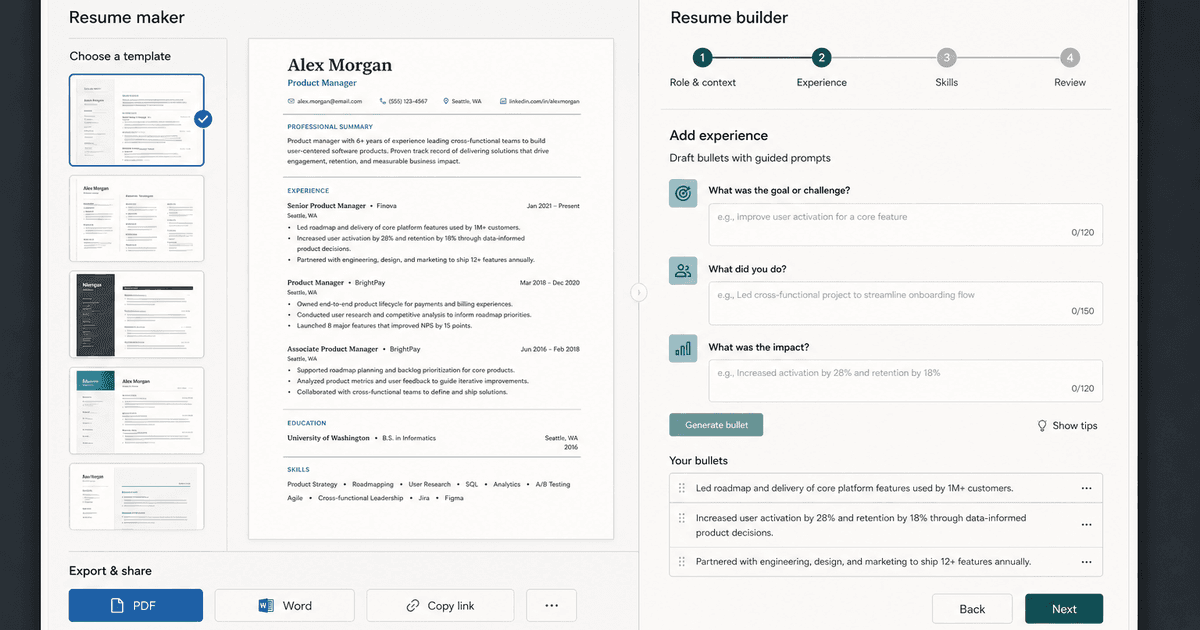
careerBy Pika Resume Team | Aug 3, 2026
Resume Maker vs Resume Builder: Which Should Job Seekers Use?
By Pika Resume Team | Aug 3, 2026
careerBy Pika Resume Team | Aug 2, 2026
Free Resume Builder and Download vs Microsoft Word
By Pika Resume Team | Aug 2, 2026
careerBy Pika Resume Team | Jul 30, 2026
What Is the Best Resume Builder Website for 2026?
By Pika Resume Team | Jul 30, 2026
careerBy Pika Resume Team | Jul 27, 2026
How to Cancel Resume Builder Subscription Without Surprises
By Pika Resume Team | Jul 27, 2026
careerBy Pika Resume Team | Jul 26, 2026
How Much Is Resume Builder? Free vs Paid Explained
By Pika Resume Team | Jul 26, 2026
careerBy Pika Resume Team | Jul 20, 2026
Resume Builder App: What the Best One Lets You Do
By Pika Resume Team | Jul 20, 2026
careerBy Pika Resume Team | Jul 19, 2026
Free Resume Builder and Download: Compare the Best Options
By Pika Resume Team | Jul 19, 2026
careerBy Pika Resume Team | Jul 16, 2026
Free AI Resume Builder: What It Does Well and Fails At
By Pika Resume Team | Jul 16, 2026
careerBy Pika Resume Team | Jul 13, 2026
Resume format for ATS: a simple guide that works
By Pika Resume Team | Jul 13, 2026
careerBy Pika Resume Team | Jul 12, 2026
Canva Resume Builder vs ATS Reality Check
By Pika Resume Team | Jul 12, 2026
careerBy Pika Resume Team | Jul 9, 2026
Free resume builder: what makes one worth using
By Pika Resume Team | Jul 9, 2026
careerBy Pika Resume Team | Jul 6, 2026
Resume Builder: What It Actually Does for Job Seekers
By Pika Resume Team | Jul 6, 2026
resume tipsBy Pika Resume Team | Jun 20, 2026
The Resume Sections Most People Get Wrong (and How to Fix Each One)
By Pika Resume Team | Jun 20, 2026resume tipsBy Pika Resume Team | Jun 18, 2026
How to Edit a PDF Resume Without Wrecking the Formatting
By Pika Resume Team | Jun 18, 2026resume reviewBy Pika Resume Team | Jun 16, 2026
AI Resume Feedback vs a Human Expert Review: When Each Is Worth It
By Pika Resume Team | Jun 16, 2026atsBy Pika Resume Team | Jun 14, 2026
What an ATS Actually Does to Your Resume (and the 8 Things It Scores)
By Pika Resume Team | Jun 14, 2026resume tipsBy Pika Resume Team | Jun 12, 2026
How to Tailor Your Resume to a Job Description in 2026 (the 3-Pass Method)
By Pika Resume Team | Jun 12, 2026resumeBy Gargi Chaudhari | May 30, 2026
Resume vs Biodata vs CV: Which One Do You Actually Need?
By Gargi Chaudhari | May 30, 2026resume By Astha Narang | May 28, 2026
10 Software Engineer Resume Examples That Got Interviews (2026)
By Astha Narang | May 28, 2026resumeBy Gargi Chaudhari | May 26, 2026
How to Convert a LinkedIn Profile to a Resume or CV
By Gargi Chaudhari | May 26, 2026resumeBy Astha Narang | May 23, 2026
Best Resume Format for Indian IT Services Companies (TCS, Infosys, Wipro, Accenture)
By Astha Narang | May 23, 2026resumeBy Gargi Chaudhari | May 21, 2026
The Complete Guide to ATS Resume Screening in India (2026)
By Gargi Chaudhari | May 21, 2026resumeBy Astha Narang | May 19, 2026
Hobbies and Interests for Resume: Should You Include Them?
By Astha Narang | May 19, 2026resumeBy Gargi Chaudhari | May 14, 2026
How to Write a Resume Headline That Gets Recruiter Calls on Naukri
By Gargi Chaudhari | May 14, 2026interviewBy Astha Narang | May 8, 2026
Decoding Interviewer Psychology: What They Don't Tell You for Your Next Job
By Astha Narang | May 8, 2026resumeBy Gargi Chaudhari | May 7, 2026
Career Objective for Resume: 50+ Fresher Examples (2026)
By Gargi Chaudhari | May 7, 2026resumeBy Astha Narang | May 6, 2026
7 Dangerous ATS Myths Debunked: What Actually Gets You Hired in 2026
By Astha Narang | May 6, 2026resumeBy Astha Narang | May 4, 2026
Master Your Resume: The Ultimate Guide to Listing Computer Skills
By Astha Narang | May 4, 2026resumeBy Astha Narang | Apr 29, 2026
4 Sales Resume Examples for SDR, Account Executive & Manager (2026)
By Astha Narang | Apr 29, 2026resumeBy Astha Narang | Apr 29, 2026
4 Data Analyst Resume Examples for 2026 (Entry-Level to Senior)
By Astha Narang | Apr 29, 2026resumeBy Astha Narang | Apr 24, 2026
Resume Tips for 2026: The Ultimate Guide to Landing Interviews
By Astha Narang | Apr 24, 2026resumeBy Astha Narang | Apr 22, 2026
Bad Resume vs. Good Resume: A Side-by-Side Comparison for Job Seekers
By Astha Narang | Apr 22, 2026resumeBy Astha Narang | Apr 20, 2026
How to Add LinkedIn to Your Resume the Right Way in 2026
By Astha Narang | Apr 20, 2026resumeBy Astha Narang | Apr 17, 2026
7 Common Resume Mistakes to Avoid in 2026 (and How to Fix Them)
By Astha Narang | Apr 17, 2026resumeBy Pika Resume Team | Apr 15, 2026
Master Your LinkedIn-to-Resume Link: A 2026 Guide for Top Candidates
By Pika Resume Team | Apr 15, 2026resumeBy Astha Narang | Apr 13, 2026
How to Write a Winning Resume Summary That Grabs Recruiter Attention
By Astha Narang | Apr 13, 2026careerBy Astha Narang | Apr 11, 2026
Owning Your Career Break: How to Frame a Gap Year on Your Resume in 2026
By Astha Narang | Apr 11, 2026resumeBy Astha Narang | Apr 8, 2026
The Complete 2026 Resume Guide: Crafting a Job-Winning Document
By Astha Narang | Apr 8, 2026resumeBy Astha Narang | Apr 4, 2026
Beat the ATS: Optimize Your Resume for Applicant Tracking Systems in 2026
By Astha Narang | Apr 4, 2026resumeBy Astha Narang | Mar 30, 2026
Expert Resume Review: Is It Worth the Investment for Your Career?
By Astha Narang | Mar 30, 2026resumeBy Astha Narang | Mar 25, 2026
Master the 30-Second Resume Scan: Expert & Recruiter Insights
By Astha Narang | Mar 25, 2026resumeBy Astha Narang | Mar 24, 2026
How to Explain Employment Gaps on Your Resume & Ace Interviews
By Astha Narang | Mar 24, 2026resumeBy Astha Narang | Mar 20, 2026
Master Resume Keywords: Your Guide to ATS Success
By Astha Narang | Mar 20, 2026careerBy Astha Narang | Mar 18, 2026
How to Stand Out in Interviews While Still Being Authentic
By Astha Narang | Mar 18, 2026careerBy Astha Narang | Mar 14, 2026
Why Sending the Same Resume to Every Job is Costing You Interviews
By Astha Narang | Mar 14, 2026resumeBy Astha Narang | Mar 12, 2026
The Dynamic Duo: Why AI + Human Expertise is the 2026 Career Cheat Code
By Astha Narang | Mar 12, 2026careerBy Astha Narang | Mar 9, 2026
Get Your Resume Roasted Using PIKA AI
By Astha Narang | Mar 9, 2026jobBy Astha Narang | Mar 7, 2026
How to Show a Promotion on Your Resume? (And Why Most People Get It Wrong)
By Astha Narang | Mar 7, 2026careerBy Astha Narang | Mar 6, 2026
Should You Put Your Address on Your Resume in 2026?
By Astha Narang | Mar 6, 2026careerBy Astha Narang | Mar 3, 2026
Is It Illegal to Lie on a Resume? What Actually Happens in 2026
By Astha Narang | Mar 3, 2026jobBy Pika Resume Team | Feb 5, 2026
How to Optimize Your Resume for Remote Job Applications
By Pika Resume Team | Feb 5, 2026interviewBy Pika Resume Team | Feb 1, 2026
How to Write an ATS-Friendly Resume in 2026
By Pika Resume Team | Feb 1, 2026cover-letterBy Pika Resume Team | Jan 25, 2026
Top 7 Cover Letter Mistakes That Cost You the Interview
By Pika Resume Team | Jan 25, 2026resumeBy Pika Resume Team | Jan 18, 2026
AI Resume Builders: A Complete Guide for Job Seekers in 2026
By Pika Resume Team | Jan 18, 2026jobBy Pika Resume Team | Jan 10, 2026
Resume Tips for Career Changers: Making a Smooth Transition
By Pika Resume Team | Jan 10, 2026careerBy Pika Resume Team | Jan 3, 2026
The Power of Keywords in Your Resume: An SEO Approach to Job Applications
By Pika Resume Team | Jan 3, 2026