
Master the 30-Second Resume Scan: Expert & Recruiter InsightsResume Scan
Learn what recruiters actually see in your resume during the critical 30-second scan. Optimize your resume for success with expert tips and strategies.
 Published by Astha Narang|March 25, 2026|7 min read
The 30-Second Audit: What Experts & Recruiters Actually See in Your Resume
"Most candidates treat their resume like a data dump of their entire life history. Recruiters treat it like a pitch deck they have 30 seconds to judge."
Here's a reality check that most job seekers don't want to hear. The person reading your resume is not settling in with a cup of tea to get to know you. They have a stack of 200 applications, a meeting in 45 minutes, and a very low tolerance for anything that makes them work hard to find what they need.
Research shows the average initial scan of a resume takes just 6 to 10 seconds. A so-called "deep dive" rarely stretches beyond 30. If you haven't made a strong case by that point, the file gets closed and you don't get a call back.
So what actually happens during those 30 seconds? Let's walk through it phase by phase, the same way a trained recruiter would.
By the Numbers
| Metric | What It Means |
|---|---|
| 6 seconds | Average initial glance before forming a first impression |
| 30 seconds | Maximum time a "deep read" typically lasts |
| 200+ applications | What a recruiter may review in a single day |
The F-Pattern: How Recruiters' Eyes Actually Move
Before diving into the phases, it helps to understand the physical pattern a recruiter's eyes follow on the page. Eye-tracking studies consistently show a predictable F-shaped path:
- Full horizontal scan across the top — your name, title, and summary
- Second horizontal sweep — your most recent role and first two bullet points
- Vertical skim down the left margin — dates, company names, and the skills section
This is why what sits in the top-left corner of your resume carries the most weight. Recruiters rarely read every word. They follow a pattern, and your job is to load the high-value information right into that path.
Phase 1: The Visual Hygiene Test (0 to 3 Seconds)
Before a recruiter reads a single word, their brain has already processed the layout and feel of your resume. Call it an unconscious vibe check.
The Clutter Factor
A wall of text with 0.5-inch margins and 9pt font creates mental fatigue before the reading even begins. The recruiter registers "this will be hard to read" and moves on.
The Template Signal
Experienced recruiters can spot a generic MS Word template immediately. It communicates, fairly or not, that the candidate hasn't refreshed their professional toolkit in years.
The Verdict
Messy layout equals messy thinking, at least in the recruiter's mind. Breathing room on the page is not wasted space. It's a strategic choice that keeps the eye moving forward.
Phase 2: The North Star Validation (3 to 10 Seconds)
Now the recruiter is actively looking for your professional identity. They follow the F-Pattern described above, starting from the top.
Your Header and Title
They look for a clear job title directly under your name. If you're applying for a Senior Product Manager role and your resume says "Marketing Enthusiast," the scan ends right here.
The Professional Summary
Recruiters skip objective statements entirely. An objective tells them what you want. A summary tells them what you bring. They want the latter.
The Big Win Hook
A strong summary has one standout metric that anchors your entire value proposition. Think of it as your opening line in a pitch.
Example of a hero metric that works:
"Generated ₹50 Lakhs in revenue within 6 months by optimizing B2B sales funnels."
Phase 3: The Experience Heatmap (10 to 20 Seconds)
The recruiter jumps to your most recent role. They won't read every bullet. They'll scan the first two.
The Action Verb Check
Does each bullet start with a confident, high-impact verb? This is one of the clearest signals of professional writing.
| Version | Example |
|---|---|
| Weak | "Worked on the development of a new app." |
| Strong | "Spearheaded the end-to-end development of a fintech app with 10k+ active users." |
The Stacked Achievement Formula
Experts look for bullets structured around Result, then Action, then Context. This signals that you understand the impact of your work, not just the tasks you completed.
The Left Margin Scan
They glide down the left edge reading dates and company names. They're checking for career progression: promotions, growing responsibilities, recognizable employers.
Phase 4: The Future-Proof Filter (20 to 30 Seconds)
In the final stretch, the recruiter drops to your Skills section to assess whether you're relevant to the role today, not three years ago.
The Tool Stack Check
Listing "Microsoft Office" as a core skill on a tech role application is a red flag. It signals a lack of awareness about what the current market actually values.
The Keyword Sync
Recruiters are scanning for three types of keywords:
- Hard skills — the tools and technologies you use
- Soft skills — how you lead and collaborate
- Industry context — the domain you operate in
The Final Verdict
By the 30-second mark, the recruiter has made a call: Yes, No, or Maybe. The Maybe pile is where most careers stall.
Compare these two versions. The recruiter's eye will automatically land on the bolded version and register the win before fully reading the sentence:
"Reduced operational costs by 22% using AWS Cloud Optimization."
Bold the number. Bold the outcome. Let the recruiter's brain do the rest.
The 30-Second Scorecard: Pass vs. Fail
This is how expert recruiters categorize resumes in real time during that 30-second window.
| What the Recruiter Scans | Pass Signal | Fail Signal |
|---|---|---|
| Document Layout and Flow | Clean, scannable, logically structured | Dense, chaotic, hard to follow |
| Professional Title | Matches or mirrors the job description | Vague, generic, or unrelated |
| Bullet Points | Numbers, data, and measurable impact | A list of daily tasks with no results |
| Skills Section | Modern, specialized, relevant tools | Obsolete or filler skills |
| Overall Tone | Confident, direct, authoritative | Passive, apologetic, or vague |
How Pika AI Engineers the 30-Second Win
You shouldn't need to be a trained recruiter to know how to pass a recruiter's scan. That's exactly why we built the Pika AI Engine — to take the guesswork out of resume writing entirely.
Layout Logic
Pika doesn't just hand you a pretty template. Its layouts are engineered around eye-tracking data to place your Hero Metrics in the highest-visibility zones on the page.
The Impact Rewriter
If your bullet points are underpowered, Pika AI suggests specific ways to quantify them — nudging you to add the numbers and context that experienced recruiters are actively scanning for.
Keyword Optimization
Paste in the job description and Pika tells you exactly which keywords to bring above the fold to pass the identity check in the first 5 seconds.
Ready to see how your resume holds up? Build your recruiter-ready resume on Pika AI
The Bottom Line
Your resume is not a biography. It's not a job description of your previous roles. It's a 30-second sales pitch to a person who is looking for a reason to keep reading. Every layout choice, every bullet point, every job title sitting under your name either earns time or loses it.
Stop writing your resume for yourself. Write it for the person who will spend 30 seconds deciding whether you get an interview.
Once you understand the four phases of the recruiter scan, you stop guessing and start engineering. That's the shift that actually changes your results.


Create your Resume
Your resume is an extension of you. Make it truly yours.
Related Articles
Related guides & tools
Free AI Resume BuilderBuild a tailored, ATS-friendly resume from scratchFree Resume TemplatesChoose a professional layout for your roleATS Resume CheckerCheck your score, parsing and issues before you applyOnline CV MakerCreate a CV with guided sections and templatesOnline Resume EditorEdit an existing PDF without rebuilding its layoutHobbies for ResumeSkills for ResumeLinkedIn to ResumeResume Examples
Continue Reading
Check more recommended readings to get the job of your dreams.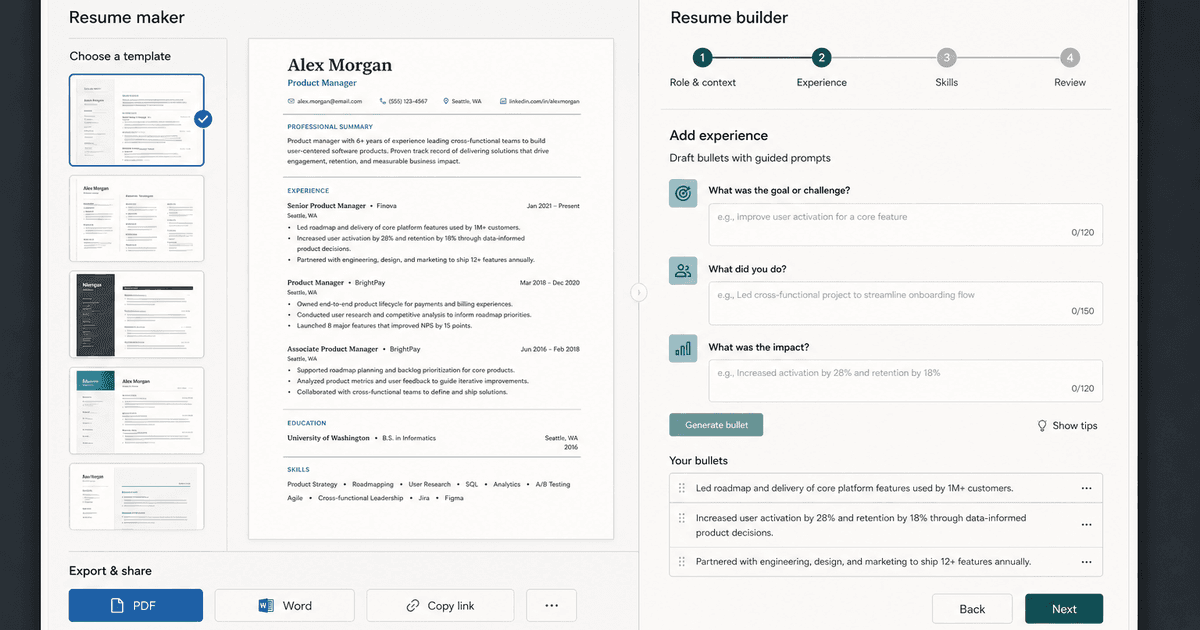
career By Pika Resume Team | Aug 3, 2026
Resume Maker vs Resume Builder: Which Should Job Seekers Use?
By Pika Resume Team | Aug 3, 2026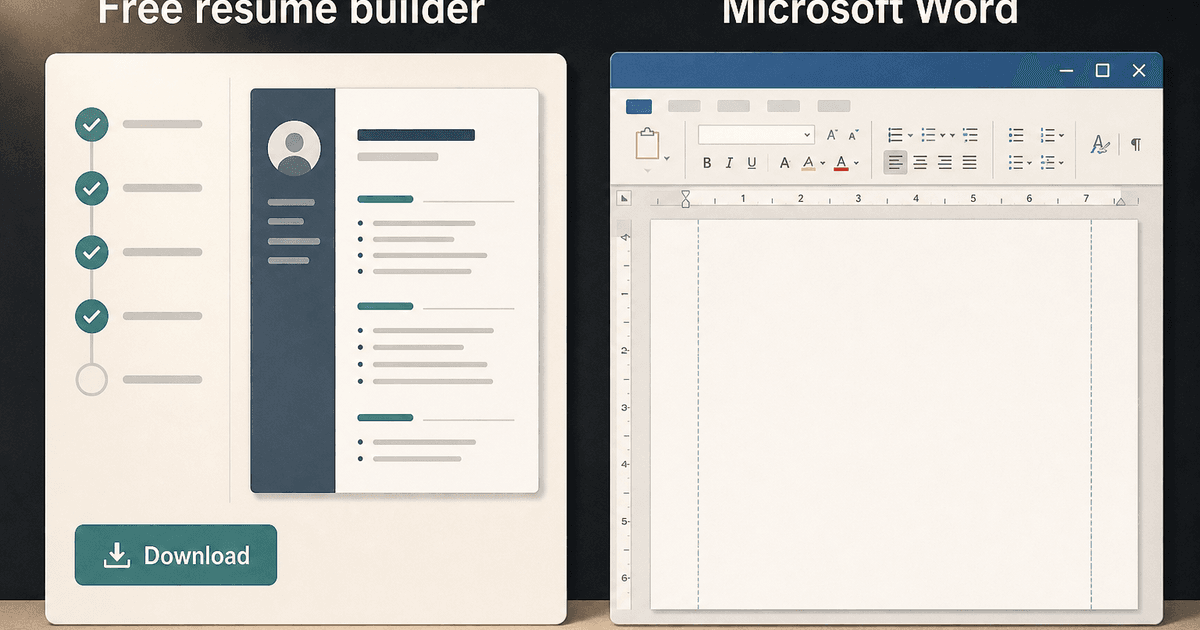
careerBy Pika Resume Team | Aug 2, 2026
Free Resume Builder and Download vs Microsoft Word
By Pika Resume Team | Aug 2, 2026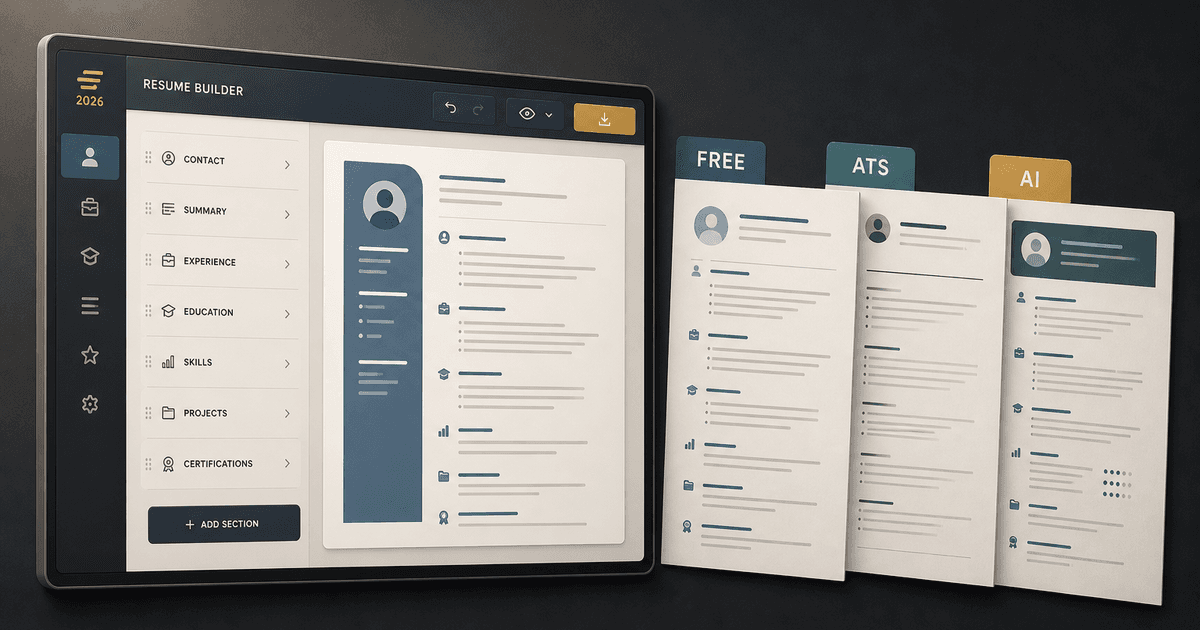
careerBy Pika Resume Team | Jul 30, 2026
What Is the Best Resume Builder Website for 2026?
By Pika Resume Team | Jul 30, 2026
careerBy Pika Resume Team | Jul 27, 2026
How to Cancel Resume Builder Subscription Without Surprises
By Pika Resume Team | Jul 27, 2026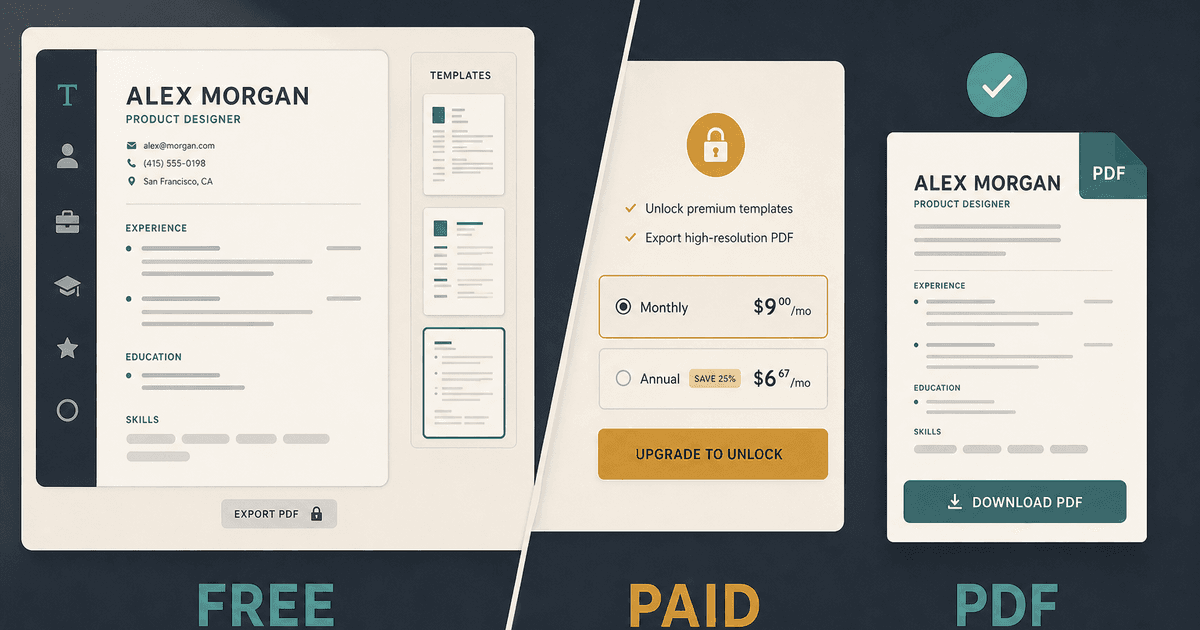
careerBy Pika Resume Team | Jul 26, 2026
How Much Is Resume Builder? Free vs Paid Explained
By Pika Resume Team | Jul 26, 2026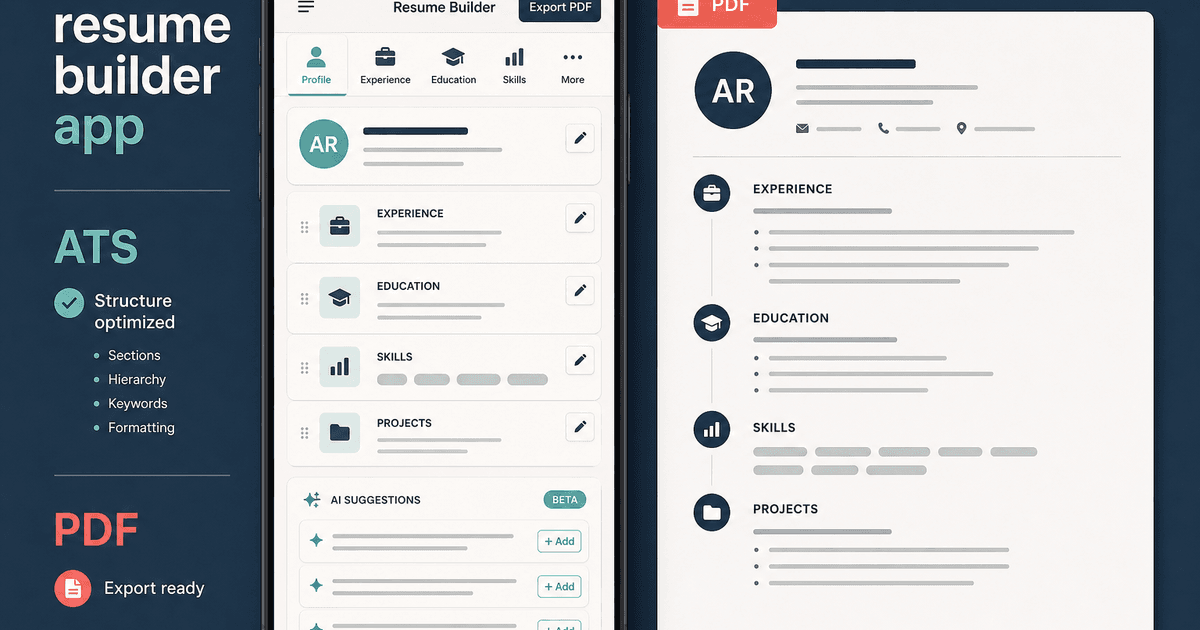
careerBy Pika Resume Team | Jul 20, 2026
Resume Builder App: What the Best One Lets You Do
By Pika Resume Team | Jul 20, 2026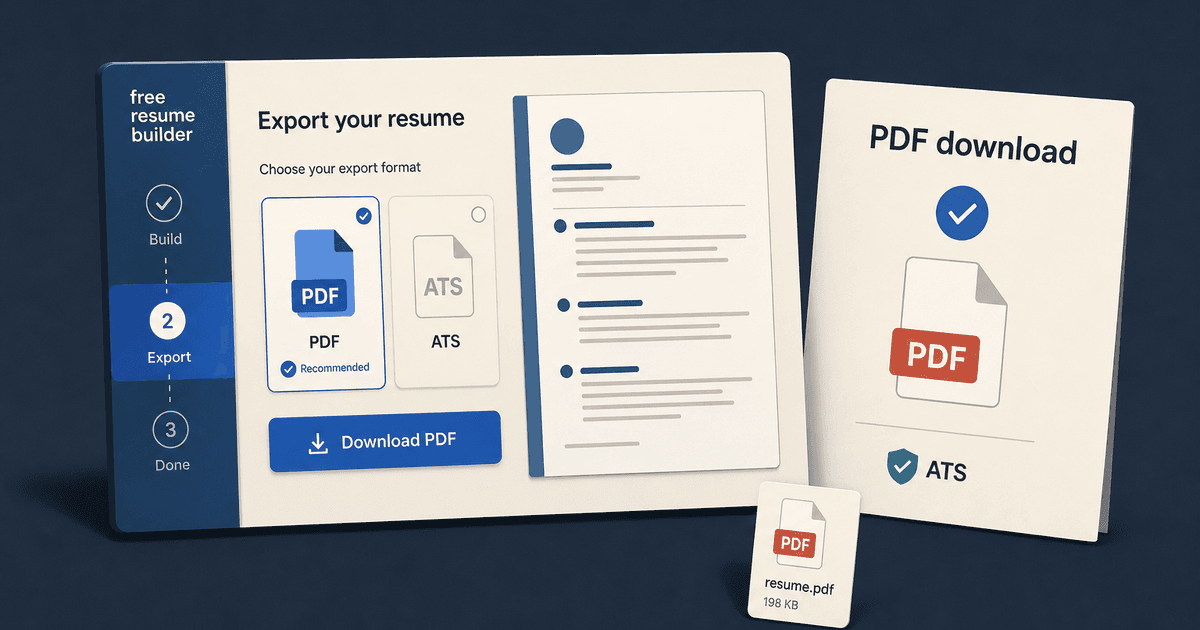
careerBy Pika Resume Team | Jul 19, 2026
Free Resume Builder and Download: Compare the Best Options
By Pika Resume Team | Jul 19, 2026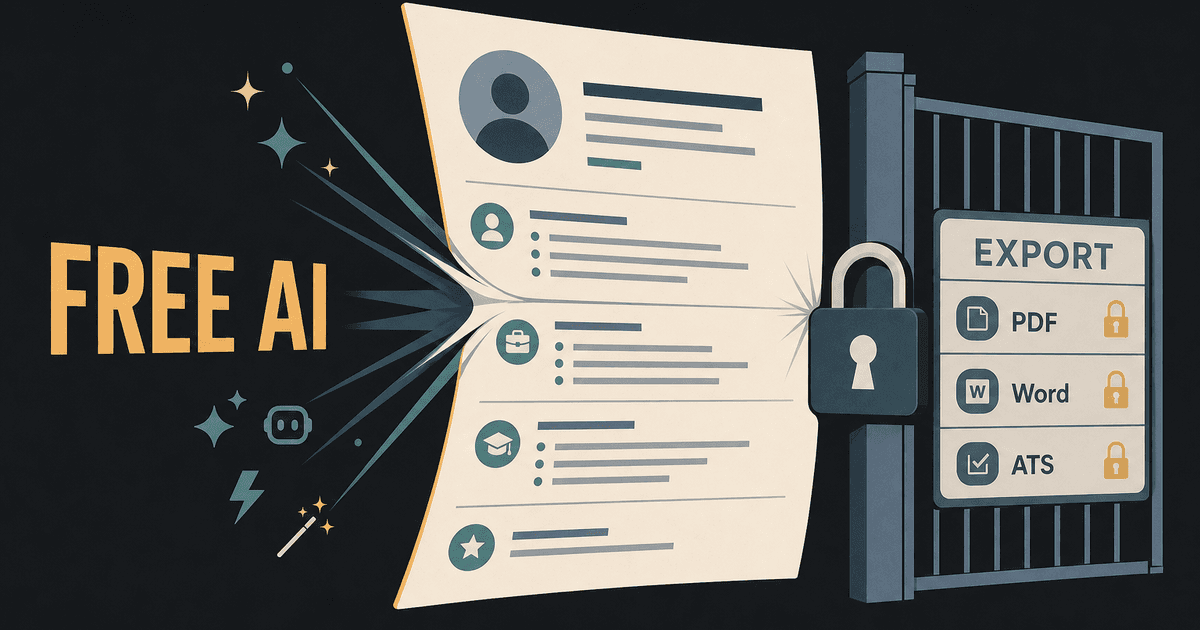
careerBy Pika Resume Team | Jul 16, 2026
Free AI Resume Builder: What It Does Well and Fails At
By Pika Resume Team | Jul 16, 2026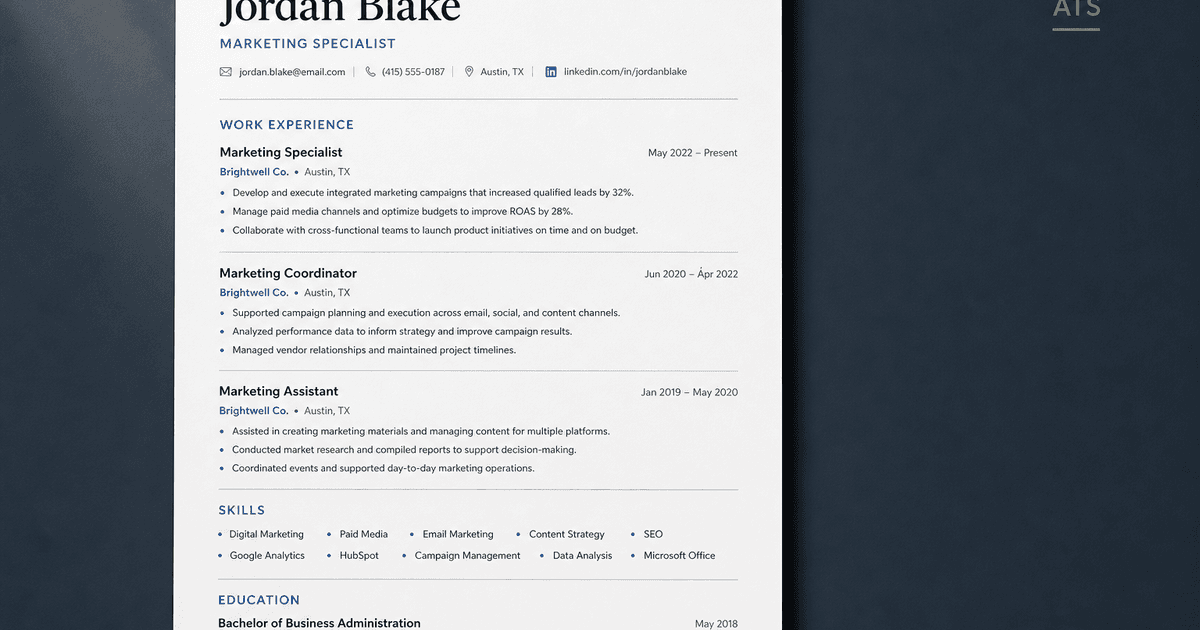
careerBy Pika Resume Team | Jul 13, 2026
Resume format for ATS: a simple guide that works
By Pika Resume Team | Jul 13, 2026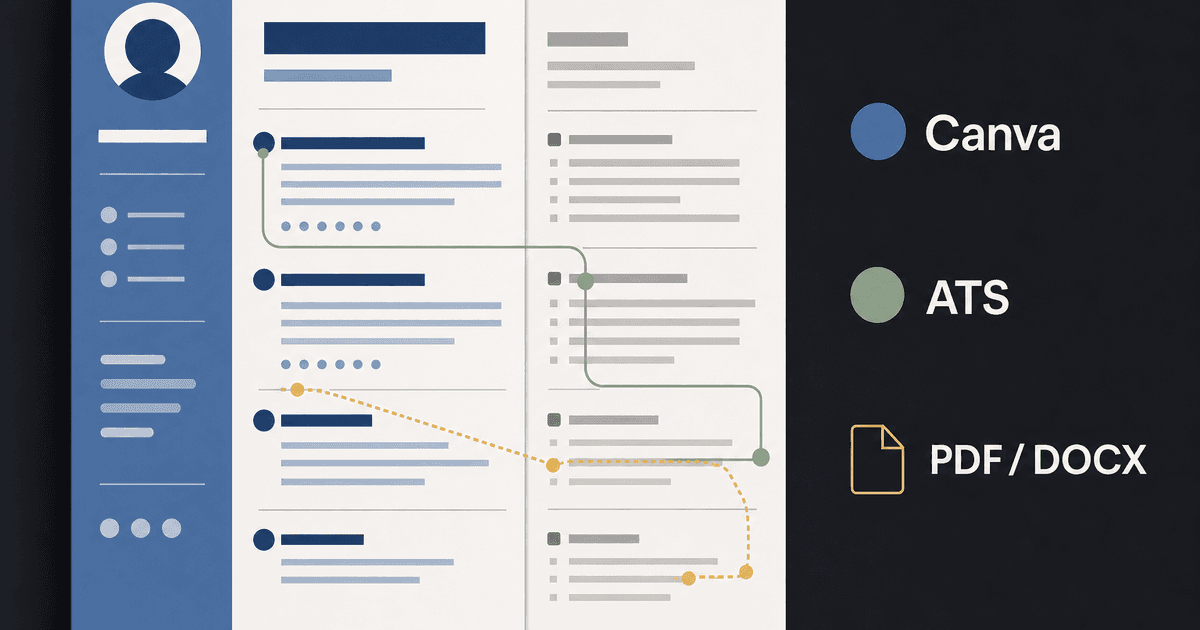
careerBy Pika Resume Team | Jul 12, 2026
Canva Resume Builder vs ATS Reality Check
By Pika Resume Team | Jul 12, 2026
careerBy Pika Resume Team | Jul 9, 2026
Free resume builder: what makes one worth using
By Pika Resume Team | Jul 9, 2026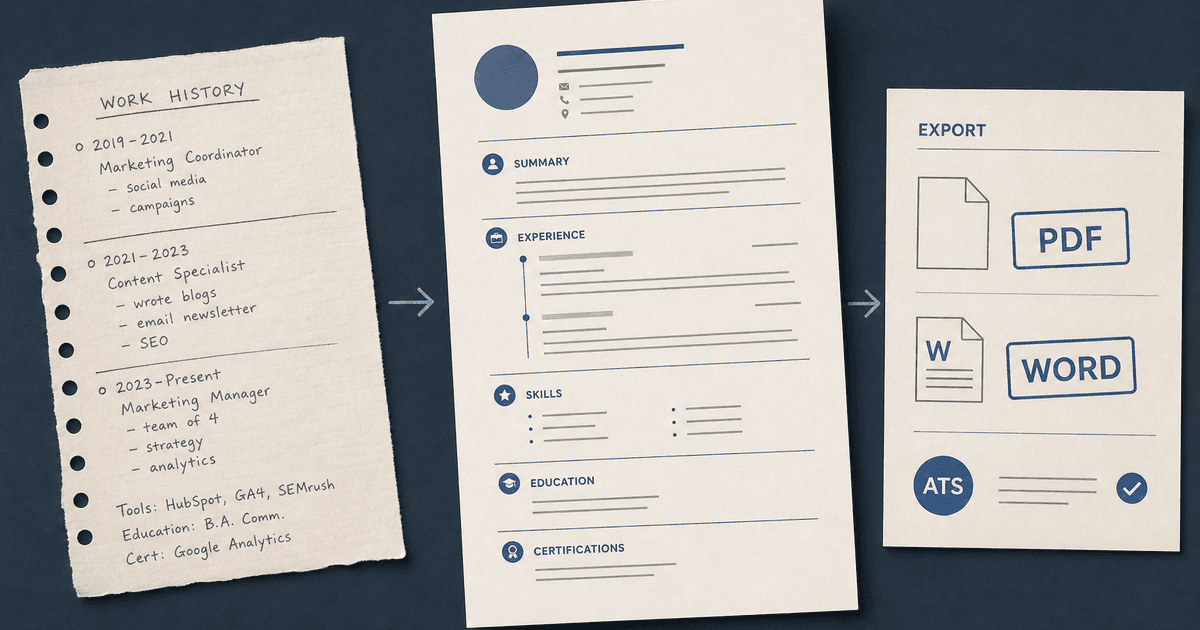
careerBy Pika Resume Team | Jul 6, 2026
Resume Builder: What It Actually Does for Job Seekers
By Pika Resume Team | Jul 6, 2026
resume tipsBy Pika Resume Team | Jun 20, 2026
The Resume Sections Most People Get Wrong (and How to Fix Each One)
By Pika Resume Team | Jun 20, 2026resume tipsBy Pika Resume Team | Jun 18, 2026
How to Edit a PDF Resume Without Wrecking the Formatting
By Pika Resume Team | Jun 18, 2026resume reviewBy Pika Resume Team | Jun 16, 2026
AI Resume Feedback vs a Human Expert Review: When Each Is Worth It
By Pika Resume Team | Jun 16, 2026atsBy Pika Resume Team | Jun 14, 2026
What an ATS Actually Does to Your Resume (and the 8 Things It Scores)
By Pika Resume Team | Jun 14, 2026resume tipsBy Pika Resume Team | Jun 12, 2026
How to Tailor Your Resume to a Job Description in 2026 (the 3-Pass Method)
By Pika Resume Team | Jun 12, 2026resumeBy Gargi Chaudhari | May 30, 2026
Resume vs Biodata vs CV: Which One Do You Actually Need?
By Gargi Chaudhari | May 30, 2026resumeBy Astha Narang | May 28, 2026
10 Software Engineer Resume Examples That Got Interviews (2026)
By Astha Narang | May 28, 2026resumeBy Gargi Chaudhari | May 26, 2026
How to Convert a LinkedIn Profile to a Resume or CV
By Gargi Chaudhari | May 26, 2026resumeBy Astha Narang | May 23, 2026
Best Resume Format for Indian IT Services Companies (TCS, Infosys, Wipro, Accenture)
By Astha Narang | May 23, 2026resumeBy Gargi Chaudhari | May 21, 2026
The Complete Guide to ATS Resume Screening in India (2026)
By Gargi Chaudhari | May 21, 2026resumeBy Astha Narang | May 19, 2026
Hobbies and Interests for Resume: Should You Include Them?
By Astha Narang | May 19, 2026resumeBy Gargi Chaudhari | May 14, 2026
How to Write a Resume Headline That Gets Recruiter Calls on Naukri
By Gargi Chaudhari | May 14, 2026interviewBy Astha Narang | May 8, 2026
Decoding Interviewer Psychology: What They Don't Tell You for Your Next Job
By Astha Narang | May 8, 2026resumeBy Gargi Chaudhari | May 7, 2026
Career Objective for Resume: 50+ Fresher Examples (2026)
By Gargi Chaudhari | May 7, 2026resumeBy Astha Narang | May 6, 2026
7 Dangerous ATS Myths Debunked: What Actually Gets You Hired in 2026
By Astha Narang | May 6, 2026resumeBy Astha Narang | May 4, 2026
Master Your Resume: The Ultimate Guide to Listing Computer Skills
By Astha Narang | May 4, 2026resumeBy Astha Narang | Apr 29, 2026
4 Sales Resume Examples for SDR, Account Executive & Manager (2026)
By Astha Narang | Apr 29, 2026resumeBy Astha Narang | Apr 29, 2026
4 Data Analyst Resume Examples for 2026 (Entry-Level to Senior)
By Astha Narang | Apr 29, 2026resumeBy Astha Narang | Apr 24, 2026
Resume Tips for 2026: The Ultimate Guide to Landing Interviews
By Astha Narang | Apr 24, 2026resumeBy Astha Narang | Apr 22, 2026
Bad Resume vs. Good Resume: A Side-by-Side Comparison for Job Seekers
By Astha Narang | Apr 22, 2026resumeBy Astha Narang | Apr 20, 2026
How to Add LinkedIn to Your Resume the Right Way in 2026
By Astha Narang | Apr 20, 2026resumeBy Astha Narang | Apr 17, 2026
7 Common Resume Mistakes to Avoid in 2026 (and How to Fix Them)
By Astha Narang | Apr 17, 2026resumeBy Pika Resume Team | Apr 15, 2026
Master Your LinkedIn-to-Resume Link: A 2026 Guide for Top Candidates
By Pika Resume Team | Apr 15, 2026resumeBy Astha Narang | Apr 13, 2026
How to Write a Winning Resume Summary That Grabs Recruiter Attention
By Astha Narang | Apr 13, 2026careerBy Astha Narang | Apr 11, 2026
Owning Your Career Break: How to Frame a Gap Year on Your Resume in 2026
By Astha Narang | Apr 11, 2026resumeBy Astha Narang | Apr 8, 2026
The Complete 2026 Resume Guide: Crafting a Job-Winning Document
By Astha Narang | Apr 8, 2026resumeBy Astha Narang | Apr 4, 2026
Beat the ATS: Optimize Your Resume for Applicant Tracking Systems in 2026
By Astha Narang | Apr 4, 2026resumeBy Astha Narang | Mar 30, 2026
Expert Resume Review: Is It Worth the Investment for Your Career?
By Astha Narang | Mar 30, 2026resumeBy Astha Narang | Mar 25, 2026
Master the 30-Second Resume Scan: Expert & Recruiter Insights
By Astha Narang | Mar 25, 2026resumeBy Astha Narang | Mar 24, 2026
How to Explain Employment Gaps on Your Resume & Ace Interviews
By Astha Narang | Mar 24, 2026resumeBy Astha Narang | Mar 20, 2026
Master Resume Keywords: Your Guide to ATS Success
By Astha Narang | Mar 20, 2026careerBy Astha Narang | Mar 18, 2026
How to Stand Out in Interviews While Still Being Authentic
By Astha Narang | Mar 18, 2026careerBy Astha Narang | Mar 14, 2026
Why Sending the Same Resume to Every Job is Costing You Interviews
By Astha Narang | Mar 14, 2026resumeBy Astha Narang | Mar 12, 2026
The Dynamic Duo: Why AI + Human Expertise is the 2026 Career Cheat Code
By Astha Narang | Mar 12, 2026careerBy Astha Narang | Mar 9, 2026
Get Your Resume Roasted Using PIKA AI
By Astha Narang | Mar 9, 2026jobBy Astha Narang | Mar 7, 2026
How to Show a Promotion on Your Resume? (And Why Most People Get It Wrong)
By Astha Narang | Mar 7, 2026careerBy Astha Narang | Mar 6, 2026
Should You Put Your Address on Your Resume in 2026?
By Astha Narang | Mar 6, 2026careerBy Astha Narang | Mar 3, 2026
Is It Illegal to Lie on a Resume? What Actually Happens in 2026
By Astha Narang | Mar 3, 2026jobBy Pika Resume Team | Feb 5, 2026
How to Optimize Your Resume for Remote Job Applications
By Pika Resume Team | Feb 5, 2026interviewBy Pika Resume Team | Feb 1, 2026
How to Write an ATS-Friendly Resume in 2026
By Pika Resume Team | Feb 1, 2026cover-letterBy Pika Resume Team | Jan 25, 2026
Top 7 Cover Letter Mistakes That Cost You the Interview
By Pika Resume Team | Jan 25, 2026resumeBy Pika Resume Team | Jan 18, 2026
AI Resume Builders: A Complete Guide for Job Seekers in 2026
By Pika Resume Team | Jan 18, 2026jobBy Pika Resume Team | Jan 10, 2026
Resume Tips for Career Changers: Making a Smooth Transition
By Pika Resume Team | Jan 10, 2026careerBy Pika Resume Team | Jan 3, 2026
The Power of Keywords in Your Resume: An SEO Approach to Job Applications
By Pika Resume Team | Jan 3, 2026